Initiatives by the All India Rail Safety Council to improve rail safety across the nation.
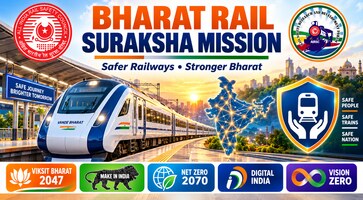
This comprehensive draft presents the Bharat Rail Suraksha Mission and the Rail Suraksha Bharat Abhiyan as visionary railway-safety initiatives proposed by the All India Rail Safety Council (AIRSC). It outlines a people-centred approach to railway and metro safety based on public awareness, accident prevention, emergency preparedness, professional capacity building, technological innovation and community participation. The draft explains that railway safety is a shared responsibility involving passengers, railway and metro personnel, students, teachers, parents, motorists, researchers, industries, volunteers and communities. It promotes essential practices such as avoiding track trespassing, obeying level-crossing gates and warning signals, using authorised crossings, remaining behind platform safety lines, preventing mobile-phone distraction and following official instructions. Special importance is given to children and young people through RailVidya, AIRSC’s children’s safety education initiative. The proposed Young Rail Safety Ambassador Programme, school safety clubs and the campaign “One Child • One Family • One Rail Safety Message” aim to transform safety knowledge learned in classrooms into responsible behaviour within families and communities. The draft also highlights emergency preparedness, basic first-aid awareness, fire safety, disaster management, inclusive passenger assistance, protection of public property, professional training, research and the responsible use of modern technologies. Its broader vision is aligned with Viksit Bharat 2047, Digital India, Make in India, Skill India, Atmanirbhar Bharat and Net Zero 2070. Overall, the document serves as a detailed vision and programme framework for developing informed passengers, responsible citizens, safety-conscious communities and future-ready railway-safety leadership. Its central message is clear: Awareness Before Risk • Prevention Before Accident • Preparedness Before Emergency • Protection of Every Life Safe Railways • Responsible Citizens • Protected Lives • Stronger India
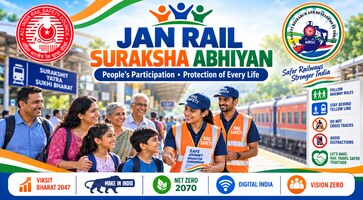
The Jan Rail Suraksha Abhiyan is a people-centred railway-safety initiative proposed by the All India Rail Safety Council (AIRSC) to strengthen public awareness, responsible behaviour and community participation in preventing railway-related accidents. It carries railway-safety education beyond trains and stations into schools, colleges, families, villages, neighbourhoods and communities situated near railway corridors. The draft explains that modern infrastructure and advanced technology alone cannot ensure complete safety. Their effectiveness also depends upon alert passengers, disciplined road users, responsible families and communities that respect authorised safety procedures. It therefore presents railway safety as a shared national responsibility involving citizens, students, teachers, parents, motorists, volunteers, professionals and public institutions. Major areas covered by the Abhiyan include prevention of track trespassing, level-crossing safety, responsible platform and train behaviour, avoidance of mobile-phone distraction and dangerous photography, emergency preparedness, fire and electrical awareness, passenger inclusion, environmental cleanliness and protection of railway property. Children and young people occupy a central place in the initiative. Through RailVidya, school programmes, safety clubs and the Young Rail Safety Ambassador Programme, students can develop lifelong safety habits and carry verified messages into their homes. The concept “One Child • One Family • One Rail Safety Message” demonstrates how informed children can positively influence families and communities. The draft also proposes community volunteer networks, educational campaigns, digital knowledge resources, internships, fellowships and recognition programmes. These activities are intended to complement the work of authorised railway, metro, security and emergency institutions without assuming their statutory or operational responsibilities. Aligned with the aspirations of Viksit Bharat 2047, the Jan Rail Suraksha Abhiyan seeks to transform railway safety from an occasional instruction into an everyday public value. Its fundamental message is: Every Citizen a Safety Partner • Every Community a Guardian of Life Jan-Jan Ki Bhagidari • Rail Suraksha Ki Zimmedari Alert Citizens • Responsible Communities • Safer Railways • Protected Lives
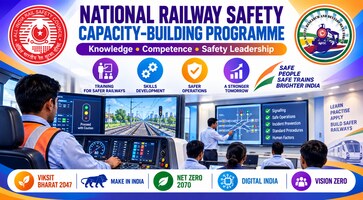
The National Railway Safety Capacity-Building Programme is a forward-looking education, training and professional-development initiative proposed by the All India Rail Safety Council (AIRSC). It aims to strengthen railway and metro safety knowledge, practical competence, institutional preparedness and ethical leadership among students, educators, researchers, professionals, volunteers and community representatives. The draft is based on the principle that railway-safety capabilities must develop alongside modern infrastructure and technology. Advanced trains, intelligent monitoring, digital passenger services and upgraded stations can deliver their full benefits only when supported by knowledgeable professionals, informed passengers and safety-conscious institutions. The Programme connects theoretical knowledge with responsible practical application. Its principal learning areas include: • Railway and metro safety fundamentals • Risk identification and accident prevention • Track, level-crossing, station and platform safety • Passenger discipline and inclusive assistance • Emergency and disaster preparedness • Fire, electrical and basic first-aid awareness • Responsible safety communication • Artificial intelligence and emerging safety technologies • Research, innovation and institutional preparedness • Community engagement and safety leadership The draft clearly distinguishes general awareness education from specialised operational duties. Rescue, medical treatment, firefighting, electrical isolation, security intervention and railway operations must remain the responsibility of qualified and authorised professionals. It also states that certificates issued through the Programme must not be presented as statutory licences, employment guarantees or professional authorisations. Through seminars, workshops, certificate courses, online learning, research forums, simulations, fellowships and internships, the Programme seeks to develop capable individuals who can recognise risks, communicate accurately and promote safe behaviour within their permitted roles. Children and young people are included through RailVidya, the Young Rail Safety Ambassador Programme and the message “One Child • One Family • One Safety Message.” Aligned with Viksit Bharat 2047, Skill India, Digital India, Make in India and Atmanirbhar Bharat, the Programme represents a long-term investment in people, professional values, institutional capability and future-ready railway-safety leadership. Its central message is: Knowledge Builds Competence • Competence Strengthens Safety • Leadership Protects Lives Learn with Purpose • Practise with Discipline • Lead with Integrity • Protect Every Life
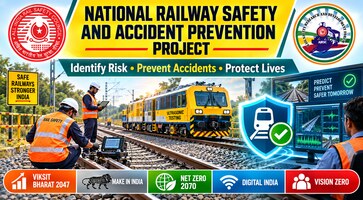
The National Railway Safety and Accident Prevention Project is a comprehensive and forward-looking initiative proposed by the All India Rail Safety Council (AIRSC). It is designed to promote railway and metro safety awareness, identify potential hazards, prevent avoidable accidents, strengthen emergency preparedness and encourage responsible participation among passengers and communities throughout India. The Project follows a proactive principle: safety action must begin before an accident occurs. It therefore encourages the early identification and responsible reporting of unsafe conditions so that authorised professionals can evaluate and address them before they develop into serious incidents. Its major areas of focus include track-trespassing prevention, level-crossing safety, disciplined platform behaviour, safe boarding and alighting, electrical and fire awareness, avoidance of mobile-phone distraction, emergency preparedness, passenger inclusion and protection of railway property. It also promotes responsible digital communication, particularly during emergencies. Children and young people have an important role within the Project. Through RailVidya, school programmes, safety assemblies and the Young Rail Safety Ambassador Programme, students can learn essential safety practices and share them with their families. The message “One Child • One Family • One Rail Safety Message” reflects the Project’s belief that early education can create lifelong habits and influence entire communities. The Project also proposes training programmes, research forums, innovation initiatives, digital knowledge resources, community outreach, internships, fellowships and recognition programmes. Emerging technologies—including artificial intelligence, predictive analytics, smart surveillance and sensor-based monitoring—are presented as tools that can support professional judgement, preventive maintenance and informed decision-making. The draft clearly states that community participants and volunteers should focus only on education, awareness and responsible reporting. Railway operations, technical inspections, rescue, medical treatment, firefighting and security intervention must remain with appropriately trained and authorised professionals. Aligned with Viksit Bharat 2047, Digital India, Make in India, Skill India, Atmanirbhar Bharat and Net Zero 2070, the Project represents a long-term commitment to safer, smarter, more inclusive and sustainable railway travel. Its central message is: Recognise the Hazard • Report It Responsibly • Prevent the Accident • Protect the Life Prevention Before Emergency • Responsibility Before Risk • Protection Before Loss Safe Tracks • Safe Stations • Responsible Passengers • Prepared Communities • Protected Lives
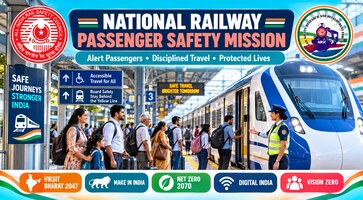
The National Railway Passenger Safety Mission is a comprehensive passenger-awareness initiative proposed by the All India Rail Safety Council (AIRSC). It aims to make railway and metro journeys safer by promoting alertness, discipline, accident prevention, emergency preparedness, inclusive travel and responsible passenger behaviour throughout India. The Mission is founded on a balanced principle: every passenger has the right to safe travel and the responsibility to follow authorised instructions, respect fellow travellers and protect public infrastructure. It recognises that modern trains, advanced signalling, intelligent monitoring and improved stations can achieve their full safety potential only when passengers cooperate and make responsible decisions. The draft addresses the complete passenger journey—from planning and arriving at the station to boarding, travelling and reaching the destination safely. Its major priorities include: • Using authorised entrances, foot overbridges and subways • Remaining behind platform safety lines • Avoiding running, pushing and overcrowding • Allowing passengers to exit before boarding • Never boarding or alighting from a moving train • Avoiding mobile-phone distraction and dangerous selfies • Keeping doors, aisles and emergency equipment unobstructed • Protecting public property and maintaining cleanliness • Reporting suspicious articles, hazards and unsafe behaviour • Following verified instructions during emergencies Children, families and vulnerable passengers receive special attention. Through RailVidya and the proposed Young Passenger Safety Ambassador Programme, children can learn safe travel practices and share them with their families. The Mission also promotes dignified assistance for senior citizens, pregnant passengers, persons with disabilities and travellers requiring additional support. Emergency awareness, women’s safety, fire and electrical hazards, responsible digital communication and passenger security are also important parts of the Mission. It clearly states that rescue, medical, firefighting, security and operational duties must remain with trained and authorised professionals. The Mission proposes station campaigns, educational programmes, digital resources, passenger ambassadors, research initiatives and recognition programmes to transform safety from an occasional instruction into a natural part of every journey. Aligned with Viksit Bharat 2047, Digital India, Skill India and Net Zero 2070, the Mission supports the development of safer, more accessible and sustainable public transportation. Its central message is: Stay Alert • Follow Instructions • Travel Responsibly • Protect Every Life Safe Stations • Orderly Boarding • Responsible Travel • Inclusive Journeys • Protected Lives Alert Passengers • Disciplined Travel • Protected Lives
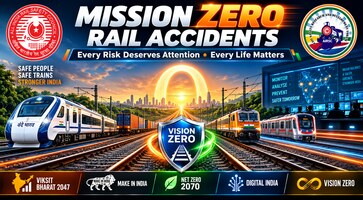
Mission Zero Rail Accidents is an ambitious, long-term railway-safety initiative proposed by the All India Rail Safety Council (AIRSC). It advances the principle that every railway-related accident, serious injury and loss of life should be treated as preventable wherever reasonably possible. The expression “Zero Rail Accidents” represents an aspirational direction—not a claim that every risk can be eliminated immediately. It calls for continuous improvement through safety education, early risk identification, responsible reporting, modern technology, professional competence, emergency preparedness and public participation. The Mission adopts the ethical principles of Vision Zero, recognising that every human life is precious and that preventable loss should never be accepted as an unavoidable cost of mobility. It considers how infrastructure, technology, maintenance, human behaviour, communication, training and environmental conditions interact in creating or controlling risk. Its principal safety priorities include: • Preventing track trespassing and unauthorised crossings • Improving safety awareness at level crossings • Promoting disciplined station and platform behaviour • Ensuring safe boarding and alighting • Preventing mobile-phone distraction and dangerous photography • Strengthening fire, electrical and emergency awareness • Encouraging early hazard reporting • Protecting railway infrastructure and emergency equipment • Supporting accessible, inclusive and compassionate travel Children and young people hold a central place in the Mission. Through RailVidya, school activities and the Young Rail Safety Ambassador Programme, students can learn essential safety principles and carry them into their families through “One Child • One Family • One Rail Safety Message.” The Mission also proposes research forums, innovation challenges, professional training, community campaigns, digital knowledge resources, fellowships and recognition programmes. Technologies such as artificial intelligence, predictive analytics, sensors and intelligent monitoring are presented as valuable supports for—not replacements for—professional judgement, disciplined maintenance and human responsibility. The draft carefully defines the limits of public participation. Citizens should observe, report and follow instructions, while operational control, rescue, medical care, firefighting, electrical isolation and technical intervention must remain with trained and authorised professionals. Aligned with Viksit Bharat 2047, Digital India, Make in India, Skill India, Atmanirbhar Bharat and Net Zero 2070, Mission Zero Rail Accidents represents a national commitment to safer, smarter and more sustainable railway mobility. Its defining message is: Identify the Risk • Report the Hazard • Prevent the Accident • Protect the Life Zero Complacency • Zero Unsafe Behaviour • Zero Preventable Loss of Life Safer Railways • Alert Passengers • Prepared Communities • Protected Lives
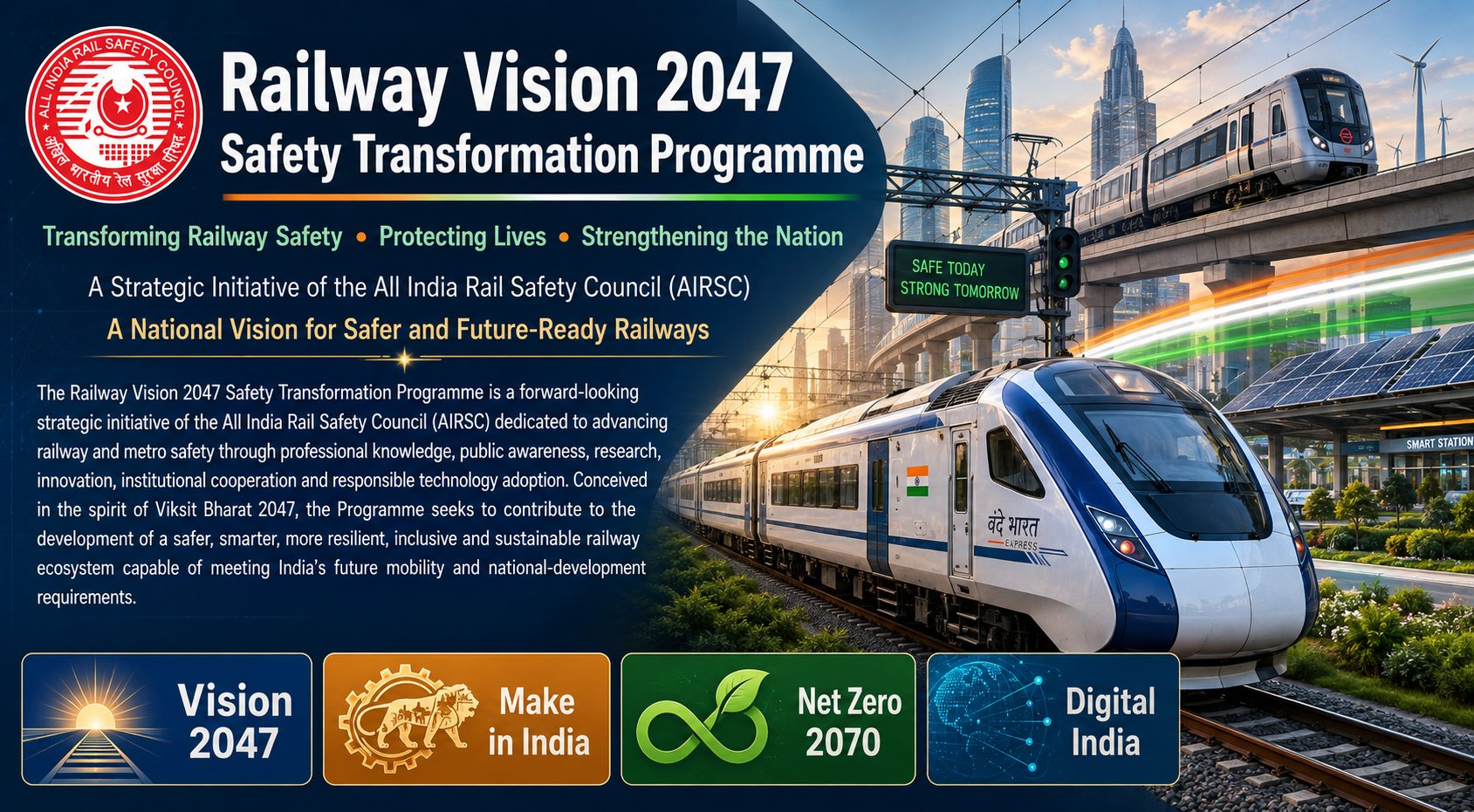
RAILWAY VISION 2047 SAFETY TRANSFORMATION PROGRAMME TRANSFORMING RAILWAY SAFETY • PROTECTING LIVES • STRENGTHENING THE NATION A STRATEGIC INITIATIVE OF THE ALL INDIA RAIL SAFETY COUNCIL (AIRSC) A National Vision for Safer and Future-Ready Railways The Railway Vision 2047 Safety Transformation Programme is a forward-looking strategic initiative of the All India Rail Safety Council (AIRSC) dedicated to advancing railway and metro safety through professional knowledge, public awareness, research, innovation, institutional cooperation and responsible technology adoption. Conceived in the spirit of Viksit Bharat 2047, the Programme seeks to contribute to the development of a safer, smarter, more resilient, inclusive and sustainable railway ecosystem capable of meeting India’s future mobility and national-development requirements. Railways are more than a mode of transport; they are a vital national lifeline connecting people, communities, industries, markets, educational institutions and regions across the country. As India’s railway, metro, high-speed rail, freight and multimodal transportation networks continue to expand and modernise, safety must remain the defining principle guiding every stage of planning, design, construction, operation, maintenance and passenger service. The Railway Vision 2047 Safety Transformation Programme therefore places the protection of human life, prevention of accidents and creation of a strong safety culture at the centre of railway transformation. From Safety Compliance to Safety Excellence The Programme promotes a decisive transition from conventional, compliance-oriented safety management to a proactive, predictive and prevention-based safety framework. Its approach recognises that sustainable safety excellence cannot be achieved through rules and technology alone. It requires competent leadership, trained personnel, reliable infrastructure, disciplined operations, responsible passenger behaviour, transparent governance, data-driven decision-making and continuous institutional learning. Under this vision, railway safety is treated as a shared responsibility extending across policymakers, railway administrations, metro organisations, engineers, operators, contractors, technology providers, educational institutions, researchers, employees, passengers and communities. The Programme seeks to strengthen coordination among these stakeholders and encourage a unified national commitment to preventing avoidable risks, protecting railway assets and ensuring safer journeys for every citizen. Safety by Design, Technology and Responsibility A central objective of the Railway Vision 2047 Safety Transformation Programme is to promote the principle of “Safety by Design.” Safety considerations should be integrated from the earliest stages of railway project planning and continue throughout the complete lifecycle of infrastructure, rolling stock, stations, signalling systems, communication networks and passenger facilities. This approach supports early hazard identification, systematic risk assessment, strong engineering controls, effective maintenance planning and measurable safety assurance. The Programme encourages the responsible adoption of advanced technologies, including Artificial Intelligence, predictive analytics, the Internet of Things, Digital Twins, intelligent asset management, condition-based monitoring, drones, robotics, geographic information systems, advanced signalling, train-protection systems and secure communication platforms. These technologies can help identify emerging risks, detect equipment deterioration, improve maintenance decisions, strengthen situational awareness and support faster emergency response. Their use must, however, remain governed by professional oversight, cybersecurity safeguards, data protection, ethical standards, interoperability and validated safety procedures. Accident Prevention and Infrastructure Resilience Accident prevention represents the primary foundation of the Programme. The initiative supports systematic attention to infrastructure integrity, track safety, bridges, tunnels, level crossings, rolling stock, signalling, electrical installations, fire protection, station facilities, depots, workshops and construction sites. It encourages risk-based inspections, independent safety reviews, structured maintenance, incident analysis and the timely correction of identified hazards. The Programme also recognises the importance of building railway infrastructure capable of withstanding extreme weather events and changing environmental conditions. Climate-resilient design, flood preparedness, heat-management systems, slope and landslide monitoring, drainage improvement, structural-health assessment and emergency restoration planning are essential for ensuring operational continuity and protecting passengers, employees and railway assets. Passenger Safety, Accessibility and Public Awareness Passenger protection is a central pillar of Railway Vision 2047. The Programme promotes safer stations, platforms, foot overbridges, escalators, lifts, waiting areas, passenger-information systems and interchange facilities. Particular importance is given to crowd management, safe boarding and alighting, emergency communication, fire and life safety, prevention of trespassing, level-crossing awareness and protection against electrical and track-related hazards. An inclusive railway system must address the requirements of children, senior citizens, women, persons with disabilities, patients, tourists and passengers requiring additional assistance. The Programme therefore advocates accessible infrastructure, clear signage, barrier-free movement, trained support personnel and compassionate emergency assistance. Safety information should be understandable, multilingual, visible and accessible so that every passenger can make informed and responsible decisions. Public-awareness campaigns, school and college programmes, community outreach, passenger education, digital learning resources and station-based safety initiatives are envisioned as important instruments for building responsible behaviour. A technically advanced railway system can achieve its full safety potential only when passengers and communities understand risks and actively support safe practices. Workforce Competence and Human-Factors Excellence The Programme recognises railway employees and frontline personnel as the foundation of operational safety. Their knowledge, judgement, alertness and professional discipline directly influence the reliability of the railway system. Railway Vision 2047 therefore gives priority to competency-based education, recurrent training, simulation-based learning, technical certification, leadership development, fatigue management and continuous professional advancement. Human factors—including workload, communication, teamwork, situational awareness, decision-making, stress, shift patterns and organisational culture—must receive systematic attention. The Programme encourages confidential reporting, fair investigation, lessons-based improvement and a professional environment in which employees can report hazards without fear of inappropriate blame. A strong safety culture is created when leadership demonstrates accountability, employees feel empowered to intervene and every incident or near miss becomes an opportunity for improvement. Emergency Preparedness and Disaster Resilience An effective railway-safety system must be prepared to manage accidents, fires, natural disasters, public-health emergencies, security incidents and major service disruptions. The Programme advocates comprehensive emergency plans, clearly defined command structures, interoperable communication systems, trained response teams, periodic drills, medical preparedness and coordinated action with government agencies, hospitals, police, fire and rescue services and local administrations. Emergency preparedness must extend beyond responding to an incident. It should include prevention, readiness, rapid mobilisation, passenger evacuation, rescue, relief, service restoration, psychological support, post-incident investigation and organisational learning. The objective is to reduce response time, minimise loss of life, protect affected communities and restore safe operations with responsibility and transparency. Research, Innovation and Indigenous Capability The Railway Vision 2047 Safety Transformation Programme seeks to promote India as a global centre for railway-safety research, education and responsible innovation. It encourages collaboration among railway organisations, universities, engineering institutions, research laboratories, start-ups, technology companies, professional bodies and young innovators. Such cooperation can accelerate the development of practical solutions for infrastructure monitoring, passenger protection, accident prevention, emergency management, cybersecurity and workforce safety. In alignment with Atmanirbhar Bharat, Make in India, Digital India and Skill India, the Programme supports the development of indigenous technologies, safety equipment, training systems and professional capabilities suited to Indian operating conditions. Innovation should be affordable, scalable, reliable, interoperable and capable of delivering measurable improvements in safety performance. Cybersecurity and Digital Railway Protection As railway operations become increasingly digital and interconnected, cybersecurity is inseparable from operational safety. Signalling, communications, passenger-information systems, ticketing platforms, surveillance networks, operational databases and intelligent infrastructure must be protected from cyber threats, system failures, data loss and unauthorised interference. The Programme promotes security-by-design, controlled access, continuous monitoring, incident-response preparedness, secure data management, regular cybersecurity assessments and professional capacity building. Digital transformation must strengthen railway reliability and public confidence while preserving safety-critical independence, human oversight, privacy and institutional accountability. Sustainability and Green Mobility Railway Vision 2047 connects safety transformation with environmental responsibility. Cleaner energy, energy-efficient stations, green construction, water conservation, waste management, renewable power, low-emission technologies and climate-sensitive infrastructure can support sustainable national mobility. However, environmental innovation must be accompanied by strong engineering validation, operational controls, emergency planning and workforce training. The Programme encourages safe and responsible progress in emerging mobility technologies, including hydrogen-powered trains, battery-electric systems, high-speed rail and next-generation urban transit. Sustainability and safety must advance together so that environmental progress contributes to reliable, resilient and passenger-centred transportation. Strategic Areas of Transformation The Railway Vision 2047 Safety Transformation Programme focuses on accident prevention, passenger protection, workforce safety, infrastructure resilience, advanced signalling, intelligent maintenance, responsible digital transformation, cybersecurity, emergency preparedness, climate resilience, accessibility, indigenous innovation, professional education, research collaboration and public participation. Together, these priorities provide an integrated framework in which technology, human responsibility, institutional capability and national development reinforce one another. The Programme also encourages the development of measurable safety indicators, periodic performance reviews, knowledge repositories, research publications, professional consultations and voluntary safety-improvement frameworks. Progress should be evaluated not only through infrastructure created or technologies deployed, but also through risks eliminated, incidents prevented, response times improved, personnel trained and public confidence strengthened. Expected National Impact The Programme aspires to contribute to safer journeys, reduced preventable risk, stronger workforce capability, more resilient railway infrastructure and improved passenger confidence. It seeks to encourage a railway system that learns continuously, responds rapidly, adopts technology responsibly and places human life at the centre of every operational and investment decision. Its long-term value will be reflected in the development of a deeply embedded safety culture across railway and metro systems. Success will not be measured by technology or infrastructure alone. It will be measured by lives protected, accidents prevented, employees empowered, communities connected, passengers respected and public trust strengthened. AIRSC’s Institutional Commitment The All India Rail Safety Council believes that railway safety is a continuing national responsibility requiring collective knowledge, professional integrity and sustained public participation. Through the Railway Vision 2047 Safety Transformation Programme, AIRSC seeks to advance awareness, education, research, dialogue, professional development and responsible cooperation across the railway and metro sectors. AIRSC aims to serve as a knowledge-driven and collaborative platform that brings together experts, professionals, institutions, industry representatives, researchers, students and community stakeholders in support of railway-safety excellence. The Council’s role is intended to complement the efforts of competent public authorities and transport organisations through constructive engagement, independent knowledge initiatives, capacity building and public-awareness activities. The Railway Vision 2047 Safety Transformation Programme reflects a clear national conviction: India’s journey towards becoming a developed nation must be supported by railways that are not only faster and more technologically advanced, but also safer, more inclusive, more resilient and more trusted by every citizen. Our Vision for 2047 By 2047, India should possess a railway and metro ecosystem in which every journey is protected by reliable infrastructure, competent professionals, intelligent technology, responsible governance and safety-conscious public behaviour. It should be a system where hazards are identified before they become accidents, emergencies are managed with speed and coordination, innovation serves human wellbeing and safety remains the highest institutional priority. RAILWAY VISION 2047 IS A COMMITMENT TO TRANSFORM SAFETY, PROTECT LIVES AND STRENGTHEN THE NATION—BECAUSE EVERY SAFE JOURNEY CONTRIBUTES TO A STRONGER INDIA. “SAFE RAILWAYS • PROTECTED LIVES • RESILIENT INFRASTRUCTURE • STRONGER INDIA” ALL INDIA RAIL SAFETY COUNCIL RAILWAYS—THE LIFELINE OF OUR NATION
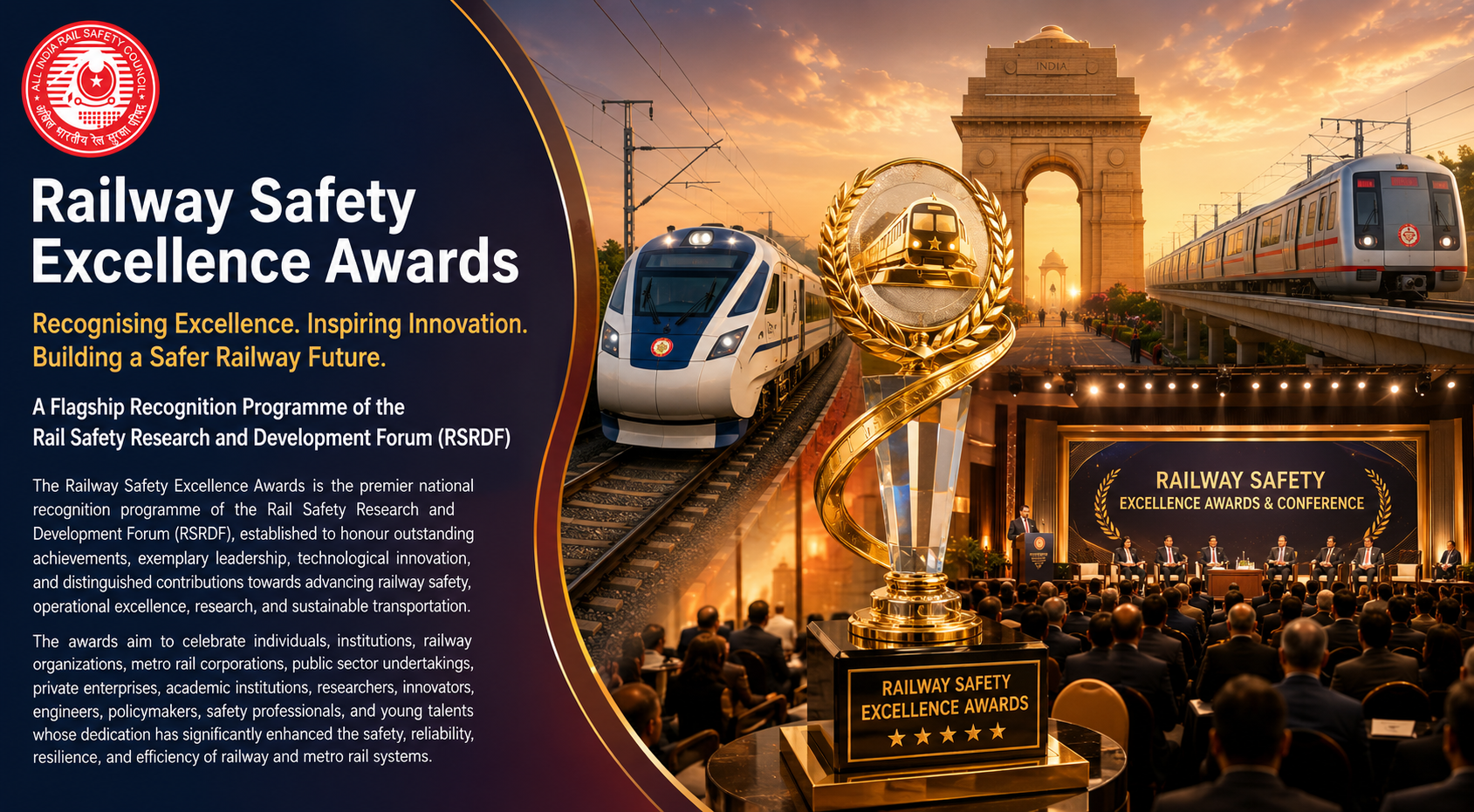
RAILWAY SAFETY EXCELLENCE AWARDS RECOGNISING EXCELLENCE. INSPIRING INNOVATION. BUILDING A SAFER RAILWAY FUTURE. A FLAGSHIP RECOGNITION PROGRAMME OF THE RAIL SAFETY RESEARCH AND DEVELOPMENT FORUM (RSRDF) The Railway Safety Excellence Awards is the premier national recognition programme of the Rail Safety Research and Development Forum (RSRDF), established to honour outstanding achievements, exemplary leadership, technological innovation, and distinguished contributions towards advancing railway safety, operational excellence, research, and sustainable transportation. The awards aim to celebrate individuals, institutions, railway organizations, metro rail corporations, public sector undertakings, private enterprises, academic institutions, researchers, innovators, engineers, policymakers, safety professionals, and young talents whose dedication has significantly enhanced the safety, reliability, resilience, and efficiency of railway and metro rail systems. By recognising excellence and encouraging innovation, the programme seeks to foster a strong culture of safety, continuous improvement, knowledge sharing, and professional integrity, contributing to India's vision of developing one of the world's safest, smartest, and most technologically advanced railway networks. The Railway Safety Excellence Awards support the national objectives of Viksit Bharat 2047, Atmanirbhar Bharat, Digital India, Make in India, and the United Nations Sustainable Development Goals (SDGs) by encouraging research, technological advancement, and collaborative solutions that strengthen public safety and sustainable mobility. Vision To establish India's most respected and prestigious recognition platform that honours excellence, innovation, leadership, and lifelong dedication in railway safety, transportation research, technology development, and operational excellence. Mission The Railway Safety Excellence Awards aim to: • Recognise exceptional contributions to railway and metro rail safety. • Promote a culture of innovation, research, and continuous improvement. • Encourage the adoption of advanced safety technologies and best practices. • Inspire future generations of railway professionals and researchers. • Strengthen collaboration among industry, academia, government, and research institutions. • Highlight outstanding achievements that contribute to safer and more sustainable transportation systems. • Celebrate individuals and organisations that demonstrate excellence in protecting lives and improving railway operations. Objectives The programme is designed to: • Honour outstanding leadership in railway safety. • Encourage innovative solutions that improve operational safety. • Recognise excellence in scientific research and technological development. • Promote best practices in safety management and risk mitigation. • Support young researchers and emerging innovators. • Celebrate organisations that demonstrate exceptional safety performance. • Encourage knowledge sharing and professional excellence. • Strengthen India's railway safety ecosystem through recognition and collaboration. Award Categories 1. Railway Safety Excellence Award The Railway Safety Excellence Award is the highest recognition presented to organisations, railway administrations, metro rail systems, public sector undertakings, industries, institutions, and professionals that have demonstrated exceptional commitment to improving railway safety, operational reliability, infrastructure resilience, and passenger protection through outstanding initiatives and measurable achievements. The award recognises excellence in safety leadership, accident prevention, operational risk management, infrastructure development, technological advancement, workforce safety, emergency preparedness, and organisational safety culture. 2. Railway Innovation Award The Railway Innovation Award recognises breakthrough ideas, advanced technologies, innovative engineering solutions, digital transformation initiatives, and pioneering research that significantly improve railway safety, efficiency, sustainability, maintenance, signalling, communication, asset management, cybersecurity, disaster preparedness, and passenger experience. Eligible innovations may include Artificial Intelligence, Internet of Things (IoT), Digital Twins, Predictive Maintenance, Robotics, Drones, Smart Sensors, Data Analytics, Intelligent Signalling Systems, Cybersecurity Solutions, Autonomous Inspection Technologies, and Green Railway Technologies. The award encourages the development and implementation of indigenous technologies that contribute to a modern and globally competitive railway system. 3. Young Researcher Award The Young Researcher Award recognises exceptional young scientists, engineers, scholars, academicians, research fellows, postgraduate students, doctoral researchers, and early-career professionals whose research demonstrates originality, scientific excellence, practical application, and the potential to transform railway safety and transportation systems. The award promotes innovation, encourages academic excellence, and supports the next generation of researchers who will shape the future of railway technology, safety engineering, digital rail systems, infrastructure management, and sustainable mobility. 4.Lifetime Achievement Award The Lifetime Achievement Award is the highest individual honour presented to distinguished personalities who have devoted decades of exceptional service to advancing railway safety, transportation engineering, public policy, scientific research, education, technological innovation, professional development, or institutional leadership. Recipients are recognised for their enduring contributions, visionary leadership, ethical values, and long-term impact on the railway sector at the national or international level. Their work serves as an inspiration for future generations of professionals committed to safety and public service. Additional Recognition Categories The Rail Safety Research and Development Forum may also present awards in specialised areas, including: • Railway Safety Leadership Award • Railway Technology Excellence Award • Metro Rail Safety Excellence Award • Disaster Management Excellence Award • Railway Cybersecurity Excellence Award • Safety Audit Excellence Award • Best Research Paper Award • Outstanding Academic Institution Award • Excellence in Railway Education & Training Award • Railway Startup Innovation Award • Women in Railway Safety Leadership Award • Sustainable Railway Development Award • Railway Infrastructure Excellence Award • Passenger Safety Initiative Award • Occupational Health & Safety Excellence Award • Emergency Response Excellence Award • International Railway Cooperation Award • Public Service Recognition Award • Corporate Social Responsibility in Rail Safety Award • Distinguished Professional Excellence Award Eligibility The awards are open to: • Railway Administrations • Metro Rail Corporations • Railway Production Units • Public Sector Undertakings • Government Organisations • Private Railway Industries • Infrastructure Companies • Technology Organisations • Academic Institutions • Universities • Research Organisations • Engineering Institutions • Safety Professionals • Scientists • Engineers • Faculty Members • Students and Research Scholars • Startups and Innovation Teams • Individual Contributors • International Organisations working in railway safety and transportation Evaluation Criteria All nominations are evaluated through a transparent and merit-based process considering: • Innovation and originality. • Contribution to railway safety. • Measurable impact and outcomes. • Technical excellence. • Research quality. • Sustainability and scalability. • Ethical standards. • Leadership and collaboration. • National and international relevance. • Long-term value to the railway sector. Selection Process The awards follow a rigorous and impartial evaluation process conducted by an independent panel of eminent experts comprising senior railway professionals, academicians, scientists, engineers, safety specialists, policymakers, and industry leaders. The selection process includes nomination review, technical evaluation, expert assessment, documentation verification, interviews or presentations (where applicable), and final approval by the Awards Jury. Benefits of the Awards Recipients receive: • National recognition for excellence. • Trophy and Citation of Honour. • Certificate of Excellence. • Recognition during the National Railway Safety Conference. • Publication of achievements in RSRDF journals and media platforms. • Opportunities for collaboration with research institutions and industry. • Invitation to serve as mentors, speakers, or technical experts in future programmes. National Significance The Railway Safety Excellence Awards are more than an awards programme—they represent a national movement to celebrate excellence, encourage innovation, and inspire continuous improvement across the railway sector. By recognising individuals and organisations that demonstrate exceptional commitment to safety, research, technology, and leadership, the programme contributes to building a resilient, knowledge-driven, and globally benchmarked railway ecosystem that protects lives, strengthens public confidence, and supports India's economic and social development. The Rail Safety Research and Development Forum (RSRDF) is committed to recognising those whose dedication, innovation, and leadership continue to transform the railway sector. Through the Railway Safety Excellence Awards, Railway Innovation Award, Young Researcher Award, and Lifetime Achievement Award, we honour excellence, encourage future innovation, and inspire a new generation of professionals who will lead the journey towards a safer, smarter, and more sustainable railway system. "Celebrating Excellence Today – Inspiring Safer Railways for Tomorrow."
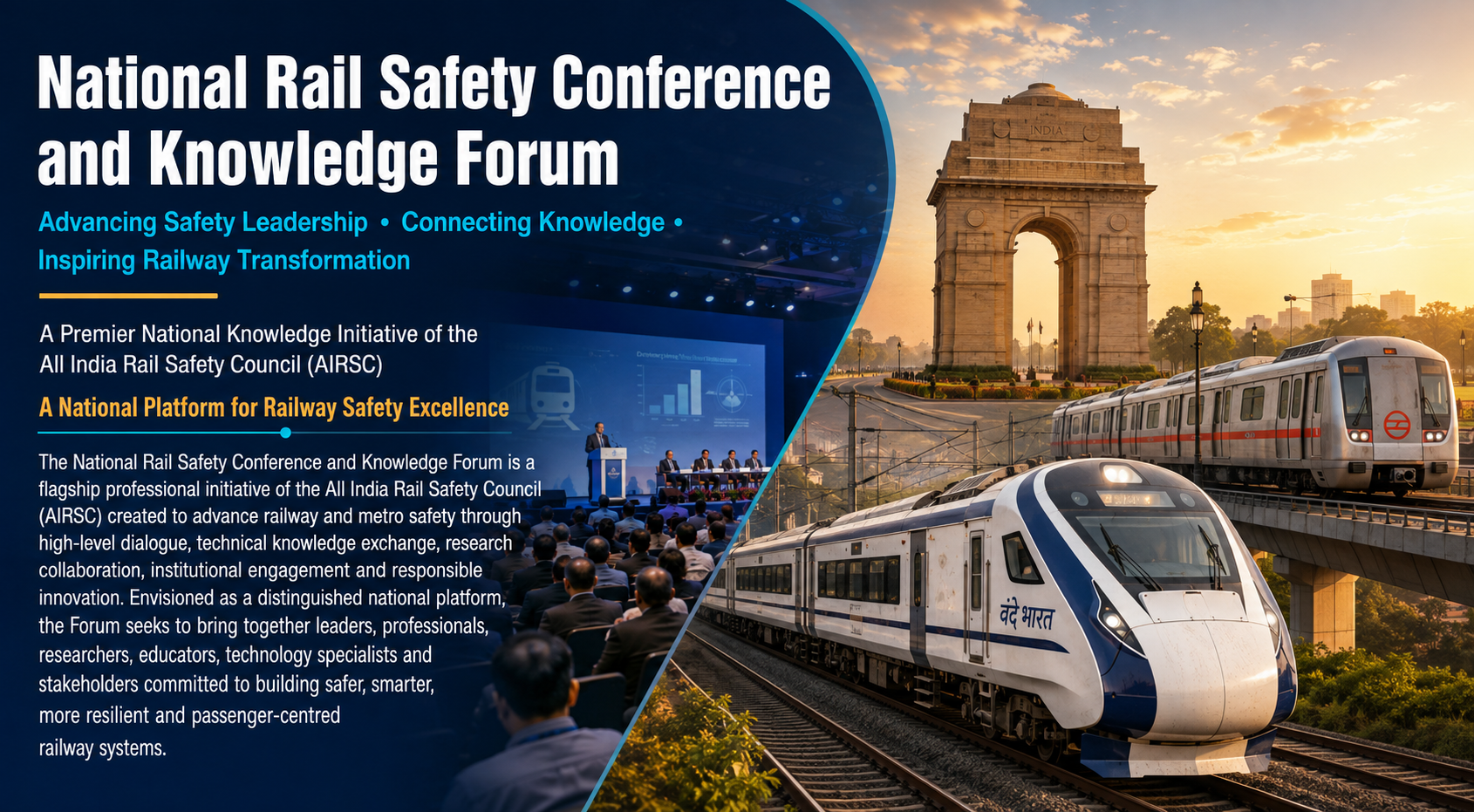
NATIONAL RAIL SAFETY CONFERENCE AND KNOWLEDGE FORUM ADVANCING SAFETY LEADERSHIP • CONNECTING KNOWLEDGE INSPIRING RAILWAY TRANSFORMATION A Premier National Knowledge Initiative of the All India Rail Safety Council (AIRSC) A NATIONAL PLATFORM FOR RAILWAY SAFETY EXCELLENCE The National Rail Safety Conference and Knowledge Forum is a flagship professional initiative of the All India Rail Safety Council (AIRSC) created to advance railway and metro safety through high-level dialogue, technical knowledge exchange, research collaboration, institutional engagement and responsible innovation. Envisioned as a distinguished national platform, the Forum seeks to bring together leaders, professionals, researchers, educators, technology specialists and stakeholders committed to building safer, smarter, more resilient and passenger-centred railway systems. India’s railway and metro networks are undergoing significant transformation through infrastructure expansion, modern stations, advanced signalling, train-protection systems, intelligent maintenance, high-speed mobility, dedicated freight corridors and digital technologies. This progress creates important opportunities while also introducing new technical, operational, cybersecurity, environmental and human-factors challenges. Addressing these challenges requires cooperation that extends across institutions, professional disciplines and geographical regions. The National Rail Safety Conference and Knowledge Forum provides a structured environment in which critical safety issues can be examined, professional experience shared and practical solutions explored. Its central purpose is to transform collective knowledge into meaningful action that protects passengers, employees, infrastructure and national mobility systems. Connecting Leadership, Knowledge and Practice Railway safety cannot be advanced through isolated efforts. It requires coordinated leadership, reliable technical knowledge, competent professionals, informed policy dialogue and a strong connection between research and field-level practice. The Forum is designed to build these connections. Senior professionals and institutional leaders may use the platform to examine strategic priorities and emerging risks. Engineers and technical specialists may share practical experience and technology insights. Researchers and academicians may present evidence-based studies, while industry representatives may demonstrate innovative safety solutions. Students and young professionals may gain exposure to contemporary challenges and national development priorities. By bringing these perspectives together, the Forum seeks to create a common professional understanding of railway-safety challenges and encourage coordinated, responsible and achievable pathways for improvement. From Discussion to Safety Transformation The National Rail Safety Conference and Knowledge Forum is envisioned as more than a ceremonial gathering. Its value lies in generating informed dialogue, professional recommendations, knowledge partnerships and practical safety-improvement ideas. Conference sessions may identify priority risks, examine accident lessons, evaluate technologies, highlight research gaps and explore institutional capacity-building requirements. Important observations may be consolidated into conference reports, knowledge papers, thematic recommendations or educational resources for wider professional reference. The Forum promotes a results-oriented approach in which discussion leads to deeper understanding, understanding supports responsible decisions and professional decisions contribute to measurable safety improvement. Principal Conference Themes The Forum may address a comprehensive range of subjects relevant to contemporary and future railway systems. Principal themes may include accident prevention, infrastructure integrity, operational reliability, passenger protection, workforce safety, station management, fire and life safety, emergency preparedness, disaster resilience, human factors and organisational safety culture. Technical sessions may also examine signalling and train protection, Kavach, CBTC, ETCS, advanced railway communication, predictive maintenance, intelligent asset management, Artificial Intelligence, Digital Twins, the Internet of Things, drones, robotics, cybersecurity and data protection. Further areas may include metro rail safety, high-speed rail, freight transportation, climate resilience, sustainable mobility, occupational health, accessibility, contractor safety, quality management, research and innovation. This broad scope reflects the interconnected character of railway safety and the need for multidisciplinary cooperation. Accident Prevention and Evidence-Based Learning Accident prevention is a central priority of the Forum. Conference discussions may examine the technical, operational, organisational, environmental and human factors that contribute to railway incidents. Participants may explore how hazard identification, risk assessment, maintenance planning, inspection, supervision and safety assurance can be strengthened. Case-study sessions may analyse accidents and near misses to understand root causes and failed safety barriers. The purpose of such analysis is not premature blame, but professional learning and prevention. Lessons should be translated into improved systems, clearer procedures, stronger competency and timely corrective action. Evidence-based learning allows the railway sector to move from reactive response to proactive prevention. A mature safety system identifies warning signs early and acts before hazards develop into serious events. Passenger Safety and Public Confidence Passenger protection is fundamental to railway-safety excellence. The Forum may examine station access, platform management, crowd movement, boarding and alighting, onboard safety, emergency communication, accessibility and passenger assistance. Special consideration may be given to children, women, senior citizens, persons with disabilities, patients and travellers requiring additional support. Railway safety should be measured not only by accident statistics but also by the accessibility, dignity, confidence and wellbeing experienced by passengers. The Forum may promote public-awareness strategies addressing track trespassing, unauthorised crossings, unsafe photography, footboard travel, electrical hazards and irresponsible behaviour. Public confidence grows when railway institutions combine reliable safety systems with transparent communication and passenger-centred service. Infrastructure Resilience and Asset Integrity Tracks, bridges, tunnels, stations, rolling stock, signalling systems, electrical installations, depots and workshops require continuous inspection, maintenance and lifecycle management. Infrastructure reliability is essential to safe and uninterrupted railway operations. The Forum may examine risk-based inspection, structural-health monitoring, condition-based maintenance, asset criticality, quality assurance and failure prediction. Participants may explore how engineering judgement, inspection data and digital monitoring can be integrated to identify deterioration and prioritise intervention. Particular attention may be given to ageing assets, high-density corridors, complex junctions, hill sections, tunnels, bridges and infrastructure exposed to extreme weather. Resilient infrastructure protects human life while supporting reliable national connectivity. Human Factors and Organisational Safety Culture Technology alone cannot guarantee safety. Human performance, communication, teamwork, fatigue, workload, situational awareness, leadership and organisational culture profoundly influence operational outcomes. The Forum may examine how workplace design, procedures, supervision, training and institutional expectations affect employee performance. It may encourage fair reporting systems in which employees can communicate hazards and near misses without fear of inappropriate blame. Strong safety leadership requires visible commitment, accountability, adequate resources and continuous engagement with frontline employees. A positive organisational culture transforms safety from a written requirement into a shared professional value. Workforce Competence and Leadership Development Railway employees and professionals are the frontline guardians of the transportation system. Rapid technological change requires continuous education, recurrent training, simulation-based learning, technical certification and leadership development. Conference sessions may consider future competency requirements for engineers, operators, maintainers, safety officers, emergency responders, technology specialists and institutional leaders. Discussions may also examine methods for measuring competency and ensuring that training translates into safe workplace performance. The Forum seeks to support a new generation of railway professionals who combine technical capability with ethical leadership, public-service responsibility and a commitment to continuous learning. Technology, Artificial Intelligence and Digital Railways Artificial Intelligence, predictive analytics, Digital Twins, the Internet of Things, intelligent surveillance, automated inspection, robotics and drones are reshaping railway operations and asset management. These technologies can improve real-time monitoring, fault detection, risk prediction and emergency response. The Forum provides a platform for examining both the opportunities and risks associated with digital transformation. Technology must be reliable, validated, secure, interoperable and suited to actual operating conditions. Human oversight and professional accountability must remain central to safety-critical decision-making. Innovation should not be evaluated solely by novelty. Its value should be determined by its ability to solve real safety problems, improve reliability, reduce risk and deliver measurable benefits to passengers and employees. Signalling, Train Protection and Communication Modern signalling and automatic train-protection technologies represent important safeguards against operational risk. The Forum may examine developments in interlocking, automatic train protection, Kavach, CBTC, ETCS and next-generation communication systems such as FRMCS, LTE-R and 5G-enabled railway networks. Technical dialogue may address redundancy, interoperability, system integration, testing, maintenance, failure management, human-machine interfaces and workforce competency. Supplementary communication solutions should remain clearly distinguished from signalling, interlocking and approved safety-critical train-protection functions. The objective is to promote informed, responsible and technically rigorous adoption of railway technologies. Cybersecurity and Digital Resilience As railway systems become more connected, cybersecurity becomes inseparable from operational safety and service continuity. Signalling interfaces, communications, surveillance, passenger-information systems, ticketing platforms, asset databases and control systems require appropriate protection. The Forum may examine security-by-design, access management, continuous monitoring, threat assessment, incident response, third-party risk, backup arrangements and data protection. It can also help build cooperation between railway engineers, safety professionals and cybersecurity specialists. Cyber resilience is achieved when organisations can prevent attacks, detect abnormal activity, respond effectively and restore essential services without compromising safety. Emergency Preparedness and Disaster Management Railway and metro systems must remain prepared for accidents, fires, medical emergencies, natural disasters, security incidents, cyber disruptions and major service interruptions. Effective preparedness requires planning, communication, trained personnel, equipment readiness and cooperation with external agencies. The Forum may address incident-command structures, passenger evacuation, rescue coordination, medical response, crisis communication, relief operations, business continuity and post-incident restoration. Case studies and simulation-based discussions can help identify gaps in emergency arrangements. Coordination among railway authorities, hospitals, fire and rescue services, police, disaster-management institutions and local administrations is essential for protecting lives and restoring safe operations. Climate Resilience and Sustainable Railways Climate-related hazards—including extreme heat, floods, heavy rainfall, landslides and cyclones—can affect railway infrastructure, electrical systems and operations. The Forum may examine climate-risk assessment, resilient design, improved drainage, slope protection, structural monitoring and emergency restoration planning. Discussions may also address renewable energy, hydrogen propulsion, battery systems, energy-efficient stations, sustainable construction, water conservation and waste management. Environmental progress must be supported by engineering assurance, operational safeguards and workforce competence. A future-ready railway must be both environmentally responsible and capable of maintaining safety under changing climatic conditions. Research, Innovation and Indigenous Capability The National Rail Safety Conference and Knowledge Forum seeks to promote high-quality research and encourage the translation of knowledge into practical railway-safety solutions. Universities, research laboratories, engineering institutions, start-ups and industry partners may use the Forum to share studies, demonstrate technologies and identify opportunities for collaboration. Priority research areas may include infrastructure monitoring, human factors, passenger behaviour, emergency management, predictive maintenance, cybersecurity, artificial intelligence, climate adaptation and safety governance. In alignment with Atmanirbhar Bharat, Make in India, Digital India and Skill India, the Forum encourages indigenous innovation, professional capability and scalable solutions suited to Indian operating conditions. Global knowledge should be studied responsibly while strengthening national research and technological self-reliance. Knowledge Forum and Professional Resource Platform Beyond the conference sessions, the Knowledge Forum is envisioned as a continuing platform for professional learning and intellectual cooperation. It may support technical papers, policy discussions, research presentations, expert consultations, case-study repositories, webinars, publications and thematic working groups. The Forum may also encourage the development of knowledge networks among professionals, universities, research organisations and industry. Such networks can sustain dialogue beyond an individual conference and contribute to long-term institutional learning. Knowledge creates its greatest value when it is accurately communicated, responsibly shared and practically applied. Distinguished Participation and Stakeholder Engagement The Forum may bring together senior professionals, subject-matter experts, engineers, safety managers, operators, researchers, faculty members, technology specialists, industry leaders, students and representatives of relevant institutions. Participation may extend across railways, metro systems, high-speed mobility, freight, infrastructure, manufacturing, technology, academia, emergency management and professional services. This multidisciplinary composition enables safety issues to be examined from technical, operational, managerial, social and environmental perspectives. Invitations, partnerships and expert participation will be determined according to the objectives, scope and requirements of each programme. Conference Formats and Knowledge Activities The National Rail Safety Conference and Knowledge Forum may include keynote addresses, plenary sessions, technical presentations, panel discussions, roundtables, research-paper sessions, case-study reviews, technology demonstrations, workshops and young-professional forums. It may also feature exhibitions, poster presentations, innovation showcases, student competitions, networking sessions and institutional consultations. Hybrid and digital formats may be used to expand participation and knowledge access. Each format should be designed to promote meaningful interaction, professional learning and clearly defined outcomes. Recognition of Excellence and Innovation Where appropriate, the Forum may provide a platform to acknowledge notable contributions to railway-safety research, professional service, innovation, education, leadership and public awareness. Recognition can encourage individuals and institutions to pursue higher standards and share successful practices. Any recognition or award should be governed by transparent criteria, responsible evaluation and clear communication. Recognition by AIRSC does not represent a government award or statutory endorsement unless expressly issued or supported by the competent authority. The purpose of professional recognition is to encourage meaningful contribution, ethical leadership and measurable improvement in railway safety. Conference Outcomes and Knowledge Legacy The enduring value of the Forum lies in the outcomes it creates. Conference proceedings, technical summaries, thematic reports and professional recommendations may preserve important knowledge and guide future dialogue. The Forum may identify research priorities, training requirements, innovation opportunities and areas for institutional collaboration. Progress can be reviewed through subsequent conferences and professional consultations. A successful conference is not measured only by the number of delegates or presentations. Its true impact is reflected in the knowledge shared, partnerships created, risks better understood and safety improvements inspired. Contribution to Viksit Bharat 2047 The National Rail Safety Conference and Knowledge Forum supports the national aspiration of developing safe, smart, sustainable and globally competitive transportation systems. It complements the principles of Viksit Bharat 2047, Atmanirbhar Bharat, Make in India, Digital India and Skill India through knowledge-led development, professional competence and responsible innovation. India’s journey towards 2047 requires railways that are technologically advanced, operationally resilient, environmentally responsible and trusted by passengers. A national knowledge platform can help connect expertise with this larger transformation. AIRSC’s Institutional Commitment The All India Rail Safety Council believes that knowledge, cooperation and professional integrity are essential foundations of railway-safety excellence. Through the National Rail Safety Conference and Knowledge Forum, AIRSC seeks to promote responsible dialogue, research, education, innovation and stakeholder engagement. AIRSC aims to provide a credible platform where experienced professionals and emerging leaders can examine challenges, share knowledge and contribute to a stronger safety culture. Its initiatives are intended to complement the responsibilities and efforts of competent government authorities, railway administrations, metro organisations and statutory institutions. Through sustained professional cooperation, AIRSC seeks to help transform safety knowledge into practical action—protecting passengers, empowering employees, strengthening infrastructure and supporting national development. Our National Knowledge Commitment The National Rail Safety Conference and Knowledge Forum reflects a powerful conviction: railway-safety challenges are best addressed when knowledge is shared, institutions cooperate, innovation is guided by responsibility and leadership places human life above every other consideration. “KNOWLEDGE FOR SAFETY • COLLABORATION FOR PROGRESS • LEADERSHIP FOR TRANSFORMATION” “CONNECTING EXPERTISE • INSPIRING INNOVATION • BUILDING SAFER RAILWAYS” “SAFE RAILWAYS • PROTECTED LIVES • RESILIENT NATION” ALL INDIA RAIL SAFETY COUNCIL RAILWAYS—THE LIFELINE OF OUR NATION SAFETY FIRST • SAFETY ALWAYS
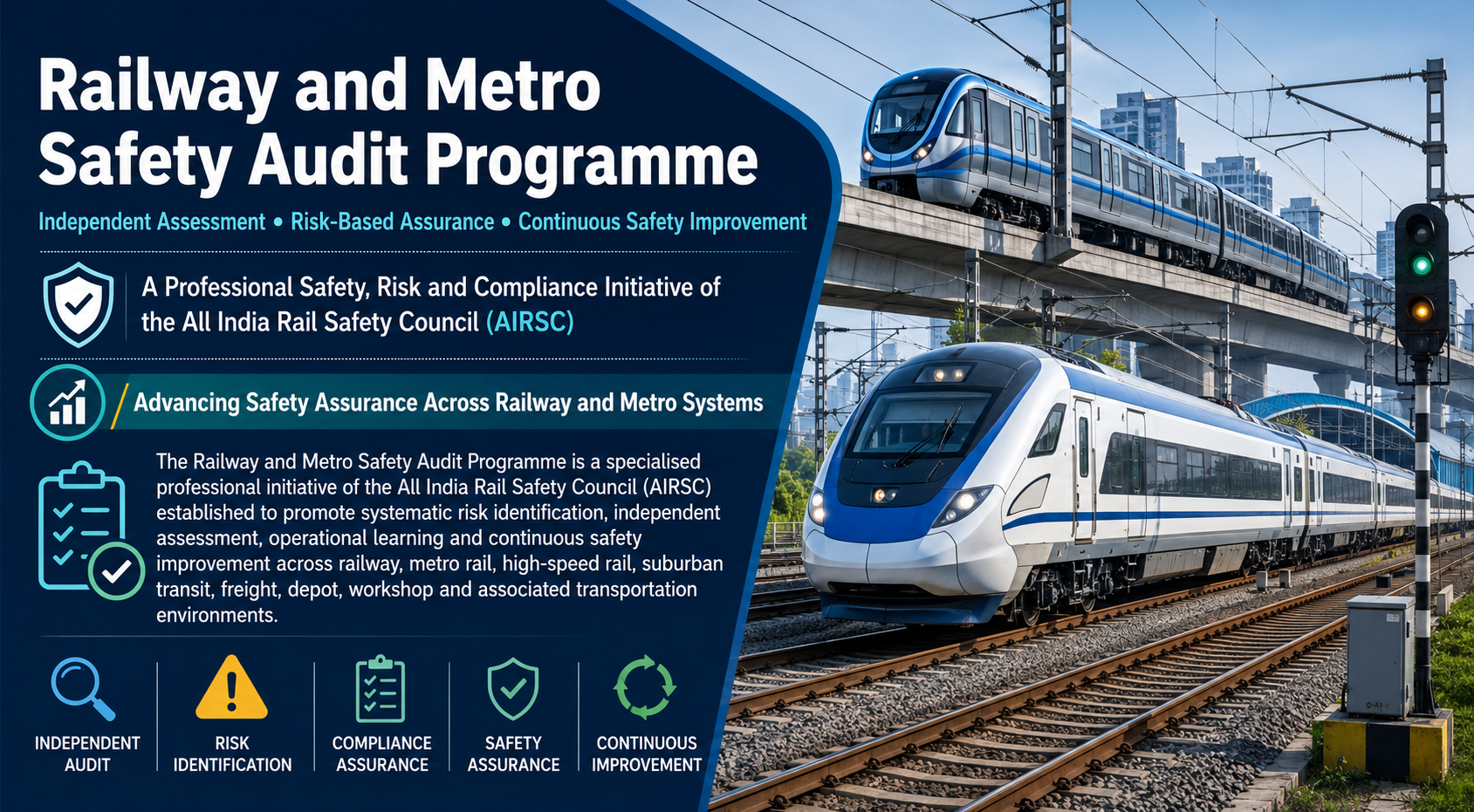
RAILWAY AND METRO SAFETY AUDIT PROGRAMME INDEPENDENT ASSESSMENT • RISK-BASED ASSURANCE • CONTINUOUS SAFETY IMPROVEMENT A Professional Safety, Risk and Compliance Initiative of the All India Rail Safety Council (AIRSC) ADVANCING SAFETY ASSURANCE ACROSS RAILWAY AND METRO SYSTEMS The Railway and Metro Safety Audit Programme is a specialised professional initiative of the All India Rail Safety Council (AIRSC) established to promote systematic risk identification, independent assessment, operational learning and continuous safety improvement across railway, metro rail, high-speed rail, suburban transit, freight, depot, workshop and associated transportation environments. Modern railway and metro systems are complex networks in which infrastructure, rolling stock, signalling, electrical systems, communications, workforce performance, passenger movement, maintenance, emergency preparedness and digital technology operate in close coordination. A weakness in any one of these areas may affect the reliability and safety of the wider system. The Programme therefore applies an integrated and multidisciplinary approach to examining how people, processes, assets, technologies and management systems collectively influence safety performance. Its principal objective is to help participating institutions understand their risks, evaluate existing controls, identify improvement opportunities and develop practical action plans. The Programme promotes a preventive philosophy in which vulnerabilities are recognised and addressed before they contribute to accidents, service disruption, asset damage, occupational injury or loss of public confidence. From Compliance Checking to Safety Transformation A high-value safety audit must extend beyond routine document verification. Policies and procedures may appear complete on paper while gaps remain in implementation, supervision, communication, maintenance or workforce understanding. The Railway and Metro Safety Audit Programme therefore seeks to examine both the design of safety systems and their effectiveness in practice. The Programme encourages a transition from compliance-focused checking to risk-based safety assurance. This approach evaluates whether critical hazards have been properly identified, whether suitable controls are in place and whether those controls are functioning consistently. It also considers whether the organisation learns effectively from incidents, near misses, inspections, complaints and operational data. The purpose is not merely to identify non-conformities. It is to strengthen organisational capability, encourage accountable leadership and support a culture in which safety improvement becomes a continuous professional responsibility. Scope of the Programme The Programme may be applied across the lifecycle of railway and metro assets—from planning and design to construction, testing, commissioning, operation, maintenance, modernisation and decommissioning. Audit scope may be customised according to the nature, size, complexity and risk profile of the participating organisation or facility. Assessments may cover mainline railway systems, metro corridors, suburban networks, stations, terminals, platforms, depots, workshops, yards, control centres, maintenance facilities, construction sites, offices, passenger amenities and supporting infrastructure. Specialised reviews may also be undertaken for a defined system, department, process, project, facility, incident theme or high-risk activity. Every assignment should begin with a clearly documented scope, objectives, criteria, methodology, responsibilities and expected deliverables. Infrastructure and Engineering Safety Infrastructure integrity is a fundamental component of safe railway and metro operations. The Programme may examine the management of tracks, bridges, tunnels, viaducts, stations, platforms, drainage systems, retaining structures, depots, workshops and associated civil infrastructure. Review areas may include inspection regimes, maintenance planning, defect reporting, asset condition, quality assurance, engineering change, worksite protection and corrective-action management. Special attention may be given to ageing assets, high-density corridors, complex junctions, flood-prone areas, hill sections and structures exposed to environmental stress. The objective is to determine whether infrastructure risks are understood, monitored and managed through appropriate engineering controls and competent professional oversight. Rolling Stock and Maintenance Assurance Rolling-stock safety depends upon disciplined inspection, preventive maintenance, competent personnel, reliable components, accurate records and effective defect management. Audit activities may examine maintenance schedules, workshop procedures, equipment condition, failure trends, quality checks and return-to-service controls. The Programme may consider how safety-critical defects are identified, communicated, prioritised and closed. It may also review spare-parts management, contractor performance, tool control, calibration, housekeeping and maintenance documentation. Where digital monitoring or predictive-maintenance systems are used, the audit may examine data reliability, alert management, human oversight and the relationship between technological recommendations and qualified engineering judgement. Signalling, Train Protection and Communication Signalling, interlocking, train-protection and operational communication systems are central to safe train movement. The Programme may review system governance, maintenance arrangements, testing procedures, competency, configuration control, failure response and interface management. Depending upon the agreed scope and available expertise, reviews may consider technologies such as automatic train protection, Kavach, CBTC, ETCS and associated communication systems. Attention may also be given to redundancy, system availability, alarms, human-machine interfaces and emergency communication. Supplementary communication technologies must remain clearly distinguished from approved safety-critical signalling, interlocking and train-protection functions. Any technical assessment must be performed within the boundaries of competence, authority and applicable requirements. Electrical, Fire and Life Safety Railway and metro facilities contain significant electrical and fire-related risks. Audit activities may examine traction power, substations, distribution systems, earthing, isolation procedures, backup power, electrical rooms, battery areas and protection against unauthorised access. Fire and life-safety reviews may cover fire detection, alarms, extinguishing systems, smoke management, emergency exits, evacuation routes, compartmentation, signage, assembly points and equipment inspection. Stations, tunnels, trains, depots, commercial areas and control rooms may require different fire-safety strategies. The Programme may also evaluate staff awareness, emergency responsibilities and the adequacy of drills. Fire-safety equipment provides meaningful protection only when it is accessible, maintained and supported by trained personnel. Operational Safety and Rule Compliance Safe operations depend upon clear rules, accurate communication, disciplined execution and effective supervision. The Programme may examine operational procedures, control-room arrangements, train movement, station duties, shift handover, abnormal operations and management of service disruptions. Auditors may assess whether responsibilities are clearly understood and whether operational controls remain effective during workload pressure, equipment failure, adverse weather or unusual passenger demand. The review may consider communication practices, recordkeeping, authorisation arrangements and compliance-monitoring mechanisms. The goal is to identify conditions that could allow operational deviations to develop and to strengthen the barriers that prevent such deviations from causing harm. Station and Passenger Safety Passenger safety is an essential dimension of railway and metro auditing. Reviews may examine station access, platform conditions, circulation routes, foot overbridges, subways, lifts, escalators, lighting, signage, public announcements, waiting areas and interchange facilities. Crowd management, safe boarding and alighting, platform-edge risk, emergency information and protection against trespassing may receive particular attention. Audit teams may examine whether passenger-flow arrangements remain effective during peak periods, festivals, special events and service disruptions. The needs of children, women, senior citizens, persons with disabilities, patients and passengers requiring assistance should be considered. A safe passenger environment must also be accessible, inclusive, understandable and dignified. Occupational Health and Workforce Safety Railway and metro employees may work around moving trains, electrical systems, heavy equipment, hazardous substances, construction activity, confined spaces and elevated locations. The Programme may review occupational risk assessment, safe-work procedures, permit systems, personal protective equipment, supervision and emergency arrangements. Additional areas may include fatigue, shift patterns, ergonomics, noise, vibration, heat stress, workplace health, welfare facilities and psychological wellbeing. Contractor and outsourced workforce safety should form part of the review where relevant. Protecting the workforce is both a legal and moral responsibility. Healthy, trained and alert employees are also essential to operational reliability and passenger safety. Human Factors and Organisational Safety Culture Human performance is influenced by system design, workload, procedures, training, communication, leadership and organisational culture. The Programme may examine whether these factors support or weaken safe performance. Audits may consider fatigue management, situational awareness, teamwork, decision-making, supervision, hazard reporting and management response. The review may also evaluate whether employees feel able to report concerns and near misses without fear of inappropriate blame. A mature safety culture is characterised by visible leadership commitment, fair accountability, open communication and continuous learning. The purpose of human-factors assessment is not to blame individuals, but to understand and improve the systems within which they work. Emergency Preparedness and Disaster Resilience The Programme may assess readiness for derailments, collisions, fires, medical emergencies, natural disasters, security incidents, cyber disruptions and major service interruptions. Reviews may examine emergency plans, command structures, communication systems, response resources and evacuation arrangements. The adequacy, frequency and learning value of drills may also be evaluated. Effective emergency preparedness requires coordination with police, fire and rescue services, hospitals, disaster-management authorities and local administrations. The audit may identify gaps in planning, equipment, training, accessibility or inter-agency cooperation and recommend improvements that strengthen response capability and reduce consequences. Construction and Project Safety Railway and metro construction projects involve complex interfaces among civil works, electrical systems, heavy machinery, contractors, existing operations and public areas. Audit activities may examine project safety plans, contractor controls, lifting operations, excavation, work at height, temporary electrical installations, confined spaces, traffic management and worksite protection. Reviews may also consider quality assurance, change management, design coordination, testing, commissioning and handover. Projects undertaken near operational railway lines or passenger areas require particularly robust controls. Safety should be integrated from the design stage and maintained throughout construction, commissioning and entry into service. Contractor and Supply-Chain Safety Contractors, suppliers and service providers form an important part of modern transportation systems. Their activities can directly influence asset quality, maintenance reliability, workplace safety and operational continuity. The Programme may evaluate contractor selection, competency, induction, supervision, permit systems, performance monitoring and incident reporting. Supply-chain reviews may consider component quality, traceability, inspection, storage, counterfeit-part risks and change control. Organisations retain responsibility for ensuring that contracted activities are planned, supervised and executed in accordance with applicable safety requirements. Cybersecurity and Digital-System Resilience As railway and metro systems become increasingly digital, cybersecurity must be integrated with operational safety and business continuity. The Programme may examine governance arrangements for operational technology, communications, ticketing, surveillance, passenger-information systems, databases and intelligent infrastructure. Review areas may include security-by-design, access control, network monitoring, backup arrangements, third-party risk, incident response, data protection and employee awareness. Digital-system assessments should be performed by competent specialists using agreed and non-disruptive methods. No intrusive testing of operational or safety-critical systems should be undertaken without explicit written authorisation, appropriate safeguards and coordination with the competent system owner. Climate Resilience and Environmental Safety Floods, extreme heat, heavy rainfall, landslides, cyclones and other environmental hazards can affect infrastructure and service continuity. The Programme may assess climate-risk identification, drainage, slope protection, heat management, emergency restoration and monitoring of vulnerable assets. Environmental review areas may include energy use, waste management, water conservation, hazardous materials and pollution control. Emerging green technologies should be assessed not only for environmental value but also for engineering safety, emergency preparedness and lifecycle reliability. A resilient railway system must be capable of protecting people and maintaining safe operations under changing environmental conditions. Audit Methodology Each audit should be based upon an approved methodology appropriate to its scope. Activities may include document review, interviews, meetings, observations, facility walkthroughs, sample verification, data examination and assessment of selected controls. Risk-assessment tools may include checklists, hazard registers, risk matrices, root-cause analysis, bow-tie analysis, HAZID, HAZOP, Job Safety Analysis or other recognised techniques suited to the assignment. The selection of methods should be proportionate to the risks being examined. Audit evidence should be relevant, reliable and traceable. Findings should be based upon verifiable observations rather than assumptions, and professional conclusions should remain within the competence and authorised scope of the audit team. Risk-Based Classification of Findings Audit findings may be classified according to their potential impact, likelihood, urgency and systemic significance. A structured classification can help management prioritise corrective actions and allocate resources effectively. High-priority findings may require immediate risk control, while medium- and lower-priority observations may be addressed through planned improvement. Positive practices may also be recorded so that successful controls can be preserved or replicated. Finding classifications should be clearly defined in the audit report. They should not be represented as statutory categories unless they are derived from an applicable legal or regulatory framework. Audit Deliverables At the conclusion of an assignment, the participating organisation may receive a professional audit report describing the scope, methodology, observations, findings, risk significance and recommendations. The report may include an executive summary, good practices, priority concerns, corrective-action recommendations, responsible ownership and suggested timelines. Where agreed, AIRSC may support a closing presentation or management discussion to explain the findings. Reports should communicate issues accurately and constructively. Recommendations should be practical, proportionate and designed to strengthen the organisation’s ability to manage risk. Corrective Action and Follow-Up The value of an audit depends upon the action taken after findings are reported. The Programme encourages organisations to prepare a structured corrective-action plan with defined responsibilities, priorities, resources and completion dates. Where requested and appropriately agreed, follow-up reviews may examine whether actions have been completed and whether the intended safety improvement has been achieved. Closure should require appropriate evidence rather than verbal assurance alone. Management remains responsible for accepting risks, approving corrective measures and ensuring implementation. AIRSC may provide independent professional observations but does not replace the accountable authority of the participating organisation. Independence, Impartiality and Confidentiality Credible auditing requires independence, professional competence, impartiality and confidentiality. Audit-team members should disclose relevant conflicts of interest and avoid assignments that could compromise objective judgement. Sensitive operational, security, personal and commercial information must be handled responsibly. Reports should be shared only with authorised recipients according to the agreed terms and applicable legal requirements. Audit findings should not be altered to satisfy commercial or reputational interests. Professional integrity is essential to the credibility and value of the Programme. Voluntary and Advisory Nature Unless specifically appointed or authorised by a competent government, regulatory or statutory authority, AIRSC audits are independent, professional and advisory in nature. They do not replace statutory inspections, mandatory approvals, safety certification, regulatory audits or the responsibilities of authorised railway and metro institutions. Participation in the Programme does not automatically certify that a facility or organisation is free from risk or fully compliant with every applicable requirement. An audit is based upon an agreed scope, available evidence and observations made during a defined period. The participating organisation retains responsibility for legal compliance, operational control, engineering decisions, risk acceptance and implementation of corrective action. Customised Audit Solutions Railway and metro organisations differ in size, technology, operational environment and risk profile. The Programme may therefore be customised as a comprehensive system audit, focused technical review, station-safety audit, depot audit, construction audit, fire-safety review, emergency-preparedness assessment or other defined assignment. Audit frequency may also be tailored according to operational need. Programmes may be conducted as preliminary assessments, periodic reviews, pre-commissioning studies, post-incident learning reviews or follow-up verifications, subject to authority and technical suitability. A clearly defined audit mandate helps ensure that the assessment remains focused, efficient and valuable. Capacity Building Through the Audit Process A well-designed audit can serve as a learning opportunity for management and employees. Interviews, observations and closing discussions help participants understand how safety controls function and where improvement is required. Subject to the agreed scope, AIRSC may complement audit activity with workshops, awareness sessions or management briefings. These educational components can strengthen ownership of corrective actions and support a more sustainable safety culture. The objective is not to make organisations dependent upon external review, but to improve their internal capability to identify and manage risks continuously. Expected Institutional Benefits The Railway and Metro Safety Audit Programme can help organisations develop a clearer understanding of their risk profile, strengthen governance, improve corrective-action management and enhance emergency preparedness. Potential benefits include earlier identification of hazards, improved coordination, stronger documentation, better workforce awareness, reduced operational disruption and more confident management decision-making. The Programme may also help organisations recognise good practices and opportunities for innovation. Its true value is measured by risks reduced, controls strengthened, actions completed and people protected. Contribution to Viksit Bharat 2047 Safe and reliable railways are essential to India’s economic growth, social inclusion, urban development and national integration. The Programme supports the broader aspirations of Viksit Bharat 2047, Atmanirbhar Bharat, Make in India, Digital India and Skill India by promoting professional competence, responsible technology, resilient infrastructure and continuous institutional improvement. India’s future mobility systems must be advanced not only in speed and capacity but also in safety, accessibility, sustainability and public trust. Independent professional assessment can contribute meaningfully to this transformation. AIRSC’s Institutional Commitment The All India Rail Safety Council believes that safety auditing is a powerful instrument for prevention, learning and organisational improvement. Through the Railway and Metro Safety Audit Programme, AIRSC seeks to advance risk-based assessment, professional integrity, technical knowledge and responsible cooperation. AIRSC aims to engage suitably qualified multidisciplinary professionals according to the scope and complexity of each assignment. The Council’s initiatives are intended to complement the responsibilities and efforts of competent government authorities, railway administrations, metro organisations and statutory institutions. Through constructive assessment and evidence-based recommendations, AIRSC seeks to help participating organisations strengthen safety systems, protect passengers and employees, preserve infrastructure and build lasting public confidence. Our Safety Assurance Commitment IDENTIFY RISKS EARLY. ASSESS CONTROLS OBJECTIVELY. CORRECT GAPS RESPONSIBLY. IMPROVE SAFETY CONTINUOUSLY. “INDEPENDENT ASSESSMENT • PROFESSIONAL INTEGRITY • SAFER RAILWAY SYSTEMS” “AUDIT FOR PREVENTION • ASSURANCE FOR PROTECTION • EXCELLENCE THROUGH IMPROVEMENT” “SAFER RAILWAYS • SAFER METROS • PROTECTED LIVES • STRONGER INDIA” ALL INDIA RAIL SAFETY COUNCIL Railways—The Lifeline of Our Nation Safety First • Safety Always
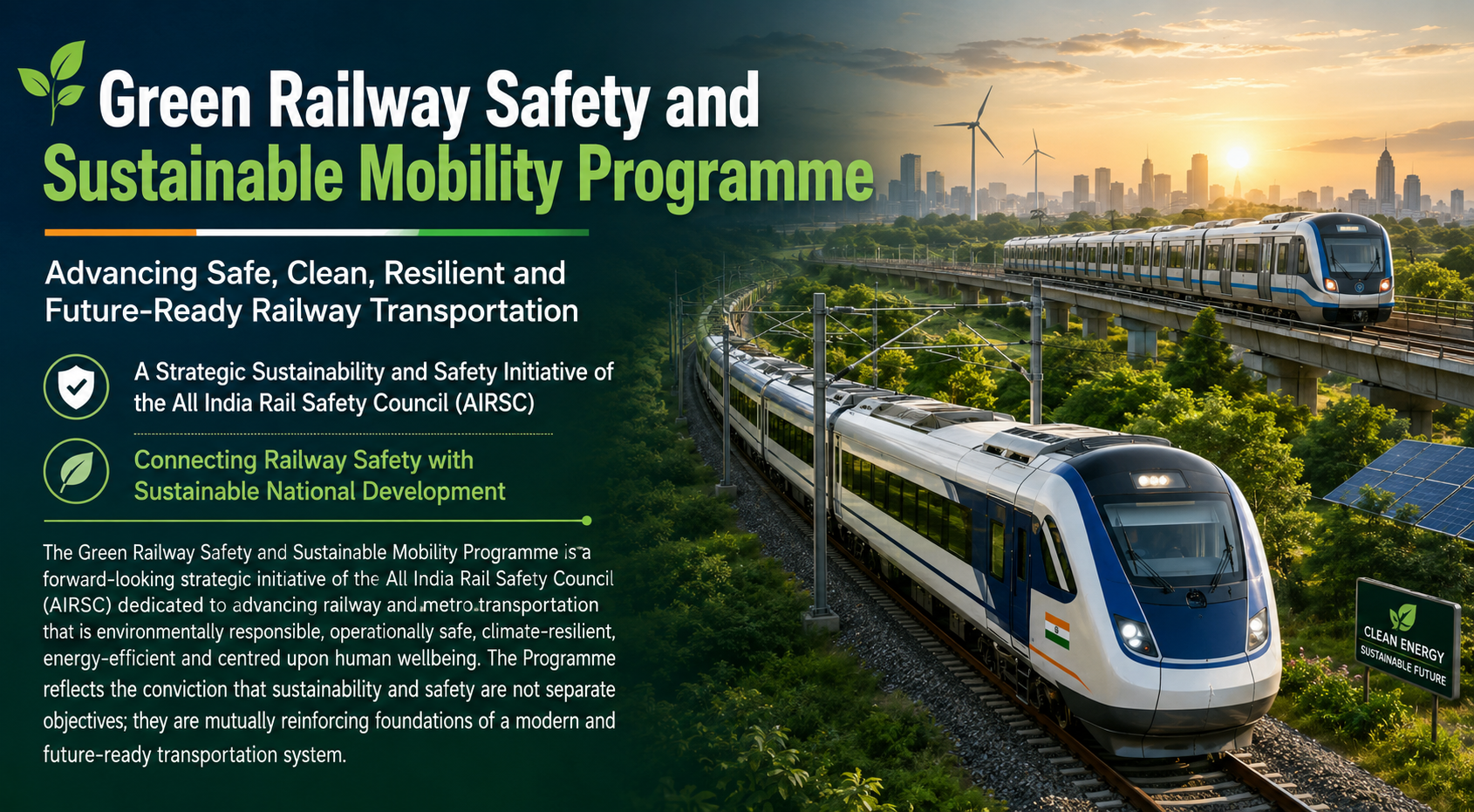
GREEN RAILWAY SAFETY AND SUSTAINABLE MOBILITY PROGRAMME ADVANCING SAFE, CLEAN, RESILIENT AND FUTURE-READY RAILWAY TRANSPORTATION A Strategic Sustainability and Safety Initiative of the All India Rail Safety Council (AIRSC) CONNECTING RAILWAY SAFETY WITH SUSTAINABLE NATIONAL DEVELOPMENT The Green Railway Safety and Sustainable Mobility Programme is a forward-looking strategic initiative of the All India Rail Safety Council (AIRSC) dedicated to advancing railway and metro transportation that is environmentally responsible, operationally safe, climate-resilient, energy-efficient and centred upon human wellbeing. The Programme reflects the conviction that sustainability and safety are not separate objectives; they are mutually reinforcing foundations of a modern and future-ready transportation system. Railways are among the most important instruments for supporting large-scale, energy-efficient public mobility and national logistics. As India expands electrification, modernises stations, introduces clean-energy technologies and develops high-speed rail, metro networks and multimodal transport systems, every environmental initiative must be supported by rigorous safety planning, technical competence, lifecycle management and emergency preparedness. The Programme seeks to bring together railway-safety principles, environmental stewardship, climate resilience, responsible innovation, professional education and public participation. Its purpose is to help create a mobility ecosystem that protects passengers and employees, conserves natural resources, reduces environmental impact and supports India’s long-term development aspirations. Safety and Sustainability—One Integrated Vision A railway system cannot be considered truly sustainable if it compromises passenger safety, workforce wellbeing, infrastructure reliability or community protection. Similarly, a safe railway system must be capable of responding responsibly to climate change, resource constraints, pollution and environmental degradation. The Programme therefore promotes an integrated “Safe and Green Railway” approach in which environmental and safety considerations are embedded throughout the lifecycle of railway infrastructure—from planning and design to construction, operation, maintenance, modernisation and eventual decommissioning. Projects should be evaluated not only according to their immediate environmental benefits but also by their reliability, maintainability, emergency risks, occupational implications and long-term contribution to resilient mobility. Vision of the Programme The vision of the Green Railway Safety and Sustainable Mobility Programme is to contribute to the development of a world-class railway and metro ecosystem that combines safety excellence with environmental responsibility, clean energy, climate resilience and inclusive public mobility. AIRSC aspires to support a future in which railway infrastructure is designed for changing environmental conditions, green technologies are adopted responsibly, employees are professionally trained and passengers participate in protecting both safety and the environment. The Programme seeks to establish safety as the governing principle of sustainable railway transformation and sustainability as an essential dimension of long-term railway resilience. Mission of the Programme The Programme’s mission is to promote research, education, professional dialogue, public awareness and responsible cooperation relating to green railway safety and sustainable transportation. It seeks to encourage energy efficiency, renewable power, cleaner propulsion, resource conservation, climate-adaptive infrastructure, low-impact construction and responsible waste management. At the same time, it promotes risk assessment, engineering validation, emergency preparedness, workforce competence and lifecycle safety for every emerging technology. Its mission is ultimately to ensure that environmental progress protects human life, strengthens railway reliability and contributes meaningfully to national development. Green Railway Infrastructure Green railway infrastructure begins with responsible planning and design. Stations, depots, workshops, offices, bridges, tunnels, viaducts and maintenance facilities should use energy, water, land and construction materials efficiently while maintaining high safety and accessibility standards. The Programme encourages passive design, natural lighting, efficient ventilation, heat-reducing materials, water conservation, rainwater harvesting and the responsible use of recycled or low-impact construction products. These measures should be supported by structural integrity, fire safety, electrical safety, evacuation planning and maintenance accessibility. Green infrastructure should remain durable, inclusive and resilient throughout its operating life. Sustainability claims must be supported by measurable performance rather than appearance alone. Energy-Efficient Stations and Facilities Railway and metro stations consume energy through lighting, cooling, ventilation, escalators, lifts, information systems, commercial activity and passenger services. Energy-efficient equipment and intelligent management systems can reduce consumption while maintaining passenger comfort and safety. The Programme promotes efficient lighting, smart controls, energy monitoring, high-performance building systems and responsible operational practices. Any energy-saving measure must preserve adequate illumination, ventilation, accessibility, surveillance, emergency operation and passenger communication. Efficiency should never create hidden safety risks. Critical systems must remain reliable under normal, degraded and emergency conditions. Renewable Energy and Electrical Safety Solar, wind and other renewable-energy systems can support cleaner railway operations and reduce dependence upon conventional energy sources. Their installation, however, introduces electrical, structural, fire, maintenance and emergency-response considerations. The Programme promotes competent design, safe installation, earthing, isolation, lightning protection, equipment inspection, battery management and access control. Emergency responders and maintenance personnel should understand the hazards associated with renewable-energy systems. Renewable power should be integrated with dependable backup arrangements, cybersecurity and operational-continuity planning where it supports critical railway functions. Safe Railway Electrification Railway electrification can improve energy efficiency and reduce direct dependence upon fossil fuels. It also involves high-voltage traction, overhead equipment, substations, return-current systems and maintenance activities requiring strict controls. The Programme supports public awareness concerning electrical hazards and the need to maintain safe distance from overhead lines, traction equipment and restricted installations. Unauthorised climbing on coaches, structures or railway equipment can result in fatal electrocution. Workforce safety requires approved isolation procedures, permits, competent supervision, protective equipment and verified restoration arrangements. Electrification must progress with equally strong attention to public and occupational safety. Hydrogen-Powered Railway Safety Hydrogen propulsion represents a promising pathway for reducing emissions on selected routes, but it introduces specialised requirements relating to fuel production, storage, transportation, refuelling, detection, ventilation and emergency response. The Programme encourages rigorous hazard assessment, validated engineering, safe depot arrangements, trained personnel and coordinated fire-and-rescue preparedness. Hydrogen systems should be supported by leak detection, controlled access, appropriate separation, reliable maintenance and clear emergency procedures. Public communication should be accurate and evidence-based. Innovation should proceed through properly authorised testing, technical evaluation and safety assurance by competent institutions. Battery-Electric and Energy-Storage Safety Battery-electric trains, station energy storage and backup-power systems can contribute to cleaner and more efficient mobility. Battery technologies may, however, present risks relating to overheating, electrical faults, fire, toxic emissions, damage and end-of-life disposal. The Programme promotes battery-management systems, thermal monitoring, suitable ventilation, fire detection, emergency isolation, maintenance controls and trained response arrangements. Damaged or degraded battery units should be managed according to approved technical procedures. Sustainability must include responsible sourcing, recycling and end-of-life management so that environmental benefits are not offset by unsafe disposal or resource waste. Clean Fuels and Emerging Propulsion Technologies Alternative propulsion technologies—including hydrogen, battery, hybrid and other low-emission systems—should be assessed across their complete lifecycle. Evaluation should consider energy source, infrastructure requirements, operational reliability, maintenance capability, emergency hazards and environmental impact. The Programme encourages technology-neutral, evidence-based assessment. No technology should be considered sustainable merely because it produces fewer emissions at the point of use. Full-system impacts and safety requirements must be examined. Emerging propulsion should complement national mobility priorities and be suitable for the route, operating environment and institutional capability. Regenerative Braking and Energy Recovery Modern electric trains can recover energy during braking and return it to the traction network or store it for later use. This can improve energy performance and reduce operating impact. Safe implementation requires reliable power electronics, protection systems, monitoring, maintenance and compatibility with the electrical network. Employees should be trained to understand normal and abnormal conditions. Energy recovery demonstrates how engineering innovation can advance sustainability and operational performance together when supported by proper safety assurance. Sustainable Railway Stations A sustainable station should be safe, accessible, efficient and welcoming. It should manage passenger movement effectively while conserving energy, water and materials. The Programme encourages green station planning that integrates natural ventilation, efficient lighting, responsible landscaping, safe waste systems, accessible facilities and climate-responsive design. Passenger information should promote environmentally responsible behaviour without reducing clarity or emergency visibility. Commercial and public areas must remain compliant with fire, electrical, structural, crowd-management and emergency requirements. Green design must strengthen—not dilute—station safety. Water Conservation and Safe Management Railway stations, depots, workshops and maintenance facilities require significant water resources. Conservation measures may include rainwater harvesting, recycling, efficient fixtures, leak detection and responsible cleaning systems. Water-saving initiatives must protect hygiene, sanitation, fire-response capability and public health. Recycled water should be clearly identified and managed so that it is not confused with drinking water. Drainage and wastewater systems should prevent contamination, flooding, slips, vector breeding and environmental damage. Water sustainability must remain connected to passenger wellbeing and infrastructure resilience. Waste Management and Circular-Economy Practices Railway and metro operations generate municipal waste, maintenance waste, packaging, electronic equipment, lubricants, batteries and other materials requiring responsible management. The Programme promotes source segregation, safe storage, recycling, authorised disposal and reduction of single-use materials. Hazardous waste must be identified, labelled and managed by competent personnel. Circular-economy principles may help extend asset life, recover valuable materials and reduce environmental impact. Reuse and recycling should never compromise the technical integrity of safety-critical components. Pollution Prevention Air, noise, water, soil and light pollution can affect passengers, employees and communities near railway operations. The Programme encourages monitoring, prevention and responsible control of environmental impacts. Noise- and vibration-reduction measures may be considered near sensitive areas, provided they do not interfere with essential warnings or operational communication. Dust, emissions and construction impacts should be managed through appropriate controls. Environmental protection is most effective when incorporated into project planning rather than treated only as a corrective measure after harm occurs. Green Construction and Project Safety Railway and metro construction can affect land, water, air quality, traffic, communities and worker safety. Sustainable construction should seek to minimise material waste, pollution, unnecessary land disturbance and energy use. At the same time, projects must maintain strong controls for excavation, lifting, machinery, temporary works, electrical installations, work at height and interfaces with operational railway systems. Green construction must never become a reason to reduce engineering margins, substitute unsuitable materials or weaken quality assurance. Environmental responsibility and construction safety must advance together. Biodiversity and Ecological Protection Railway corridors may pass through forests, wetlands, coastal regions and other ecologically sensitive areas. Responsible planning should consider wildlife movement, vegetation, drainage, soil stability and habitat impact. The Programme encourages environmental assessment, careful alignment planning, suitable mitigation and monitoring. Vegetation management should support visibility, drainage, fire prevention and track integrity while avoiding unnecessary ecological damage. Biodiversity protection should be based upon scientific evidence, lawful approvals and coordination with competent environmental and railway authorities. Climate-Resilient Railway Infrastructure Climate change presents increasing risks through floods, extreme heat, intense rainfall, landslides, cyclones, coastal hazards and other events. Railway and metro assets must be assessed for their ability to withstand changing conditions. The Programme promotes climate-risk mapping, resilient design, structural-health monitoring, improved drainage, slope protection, heat-management strategies and emergency restoration planning. Climate resilience should be integrated into asset-management and investment decisions. Infrastructure designed only according to past conditions may not remain adequate for future risk. Flood and Drainage Resilience Flooding can undermine tracks, damage electrical systems, obstruct stations and interrupt services. Effective drainage and water monitoring are essential elements of safe railway infrastructure. The Programme encourages inspection of drainage routes, culverts, embankments, bridge approaches, tunnel portals and vulnerable stations before and during high-risk seasons. Early warning and clearly defined operational responses can help reduce exposure. Restoration after flooding should include competent inspection of affected infrastructure before services resume. Heatwave and Thermal-Risk Management Extreme heat can affect rails, electrical systems, signalling equipment, rolling stock, station conditions and employee health. Heat-risk planning should consider both technical assets and human performance. The Programme promotes temperature monitoring, asset inspection, ventilation, drinking water, work-rest arrangements and appropriate operational precautions. Passenger areas should provide reasonable protection, particularly for senior citizens, children and persons with health conditions. Climate-ready safety management recognises that environmental stress can create both infrastructure failure and human-factor risk. Disaster Preparedness and Green Recovery Sustainable transportation systems must remain prepared for natural disasters, fires, technology failures and major service disruptions. Emergency plans should account for the hazards associated with renewable energy, batteries, hydrogen and other emerging systems. Recovery efforts should restore services safely while avoiding unnecessary environmental harm. Waste, contaminated materials and damaged energy systems must be handled responsibly. The principle of “build back better” should guide recovery so that damaged assets are restored with improved resilience wherever technically and economically appropriate. Sustainable Freight and Logistics Rail freight can support lower-impact movement of large volumes of goods. Its sustainability value depends upon safe operations, efficient terminals, reliable infrastructure and responsible handling of dangerous materials. The Programme encourages energy-efficient logistics, improved asset utilisation, safer loading, secure cargo management and effective emergency preparedness. Freight terminals should address fire, environmental, occupational and community risks. Better integration between rail, ports, roads and logistics hubs can improve national efficiency while reducing avoidable congestion and environmental impact. Metro Rail and Sustainable Urban Mobility Metro rail systems can support cleaner, more accessible and efficient urban transportation. Their full benefit is achieved when they integrate safely with buses, suburban rail, walking, cycling and other mobility modes. The Programme promotes safe interchange design, universal accessibility, passenger information, crowd management and climate-responsive stations. First- and last-mile connectivity should reduce risk and support inclusive access. Sustainable urban mobility must prioritise people, public safety and efficient use of urban space. Passenger Participation in Green Mobility Passengers can contribute through responsible use of public transport, proper waste disposal, water conservation and respect for railway property. Small individual actions, repeated across millions of journeys, can produce significant collective value. Public messaging should encourage practical behaviour without shifting institutional responsibilities onto passengers. Railway and metro organisations must provide appropriate facilities, while passengers should use them responsibly. Green mobility succeeds when public infrastructure and public behaviour support one another. Workforce Competence and Green Skills New energy systems and environmental technologies require new professional capabilities. Engineers, technicians, operators, emergency responders, safety officers and managers must understand the risks and maintenance requirements of emerging systems. The Programme supports education in renewable-energy safety, battery management, hydrogen hazards, climate-risk assessment, environmental management and sustainable infrastructure. Green skills must be connected with engineering competence, ethical leadership and practical safety training. A technology cannot remain sustainable if the workforce is not prepared to operate and maintain it safely. Occupational Health and Environmental Wellbeing A sustainable railway workplace should protect employees from harmful exposure, excessive heat, noise, vibration, dust, chemicals and ergonomic risks. Environmental improvements should contribute to healthier working conditions, safer maintenance and improved employee wellbeing. Worker participation can help organisations identify practical environmental and occupational improvements. Healthy and competent employees are essential to reliable railway operations and long-term sustainability. Artificial Intelligence and Smart Environmental Management Artificial Intelligence, the Internet of Things, sensors, Digital Twins and predictive analytics can support energy management, water monitoring, asset maintenance, weather-risk assessment and environmental performance. These technologies may enable early warning, faster response and more efficient use of resources. Their implementation must address reliability, cybersecurity, privacy, data quality and human oversight. Smart technology should support—not replace—competent professional judgement and validated safety processes. Research and Indigenous Innovation AIRSC encourages research into green railway technologies, sustainable infrastructure, climate resilience, passenger behaviour, energy efficiency and lifecycle safety. Universities, research laboratories, start-ups, industries and professional institutions can collaborate to develop affordable, reliable and scalable solutions suited to Indian operating conditions. In alignment with Atmanirbhar Bharat, Make in India and Digital India, the Programme promotes indigenous innovation that combines environmental benefit with measurable safety performance. Measurement and Environmental Performance Sustainability programmes should be supported by clear objectives, reliable data and transparent evaluation. Relevant indicators may include energy use, renewable-energy contribution, water consumption, waste recovery, environmental incidents and climate-risk preparedness. Safety indicators should also be monitored, particularly where new technologies or operating practices are introduced. Environmental improvement should not be reported without considering associated operational and occupational risks. Performance measurement allows organisations to identify priorities, verify benefits and improve accountability. Green Safety Reviews and Advisory Support Subject to agreed scope and available expertise, AIRSC may promote professional reviews, research, workshops and advisory activities relating to environmental safety, climate resilience and sustainable mobility. Reviews may consider green stations, renewable-energy safety, environmental management, climate preparedness, waste systems, emergency planning and workforce competency. Unless specifically authorised by a competent authority, AIRSC assessments are professional and advisory in nature. They do not replace statutory environmental clearances, engineering approvals, safety certification or regulatory inspections. Institutional Partnerships and Knowledge Exchange AIRSC seeks responsible cooperation with railway and metro organisations, universities, research institutions, industries, technology providers, environmental bodies, professional associations and community stakeholders. Collaboration may support joint research, training, conferences, technical publications, pilot concepts and public-awareness programmes. Every partnership should have clearly defined objectives, responsibilities and ethical safeguards. Participation in an AIRSC platform does not automatically constitute technology approval, procurement endorsement or government recognition. Strategic Areas of the Programme The Green Railway Safety and Sustainable Mobility Programme focuses on safe electrification, renewable energy, alternative propulsion, energy efficiency, green stations, water conservation, waste management, pollution prevention, climate resilience and sustainable construction. It also addresses occupational health, passenger participation, digital environmental management, emergency preparedness, research, indigenous innovation and professional capacity building. These priorities form a unified framework in which environmental responsibility, engineering reliability and human safety reinforce one another. Expected National Impact The Programme aspires to contribute to cleaner railway operations, safer green technologies, climate-resilient infrastructure, reduced resource consumption, stronger workforce competence and improved passenger awareness. Its success should be reflected in environmental initiatives that deliver genuine lifecycle value, infrastructure capable of withstanding future conditions and technologies introduced with appropriate safety assurance. The ultimate measure of progress will not be the number of green technologies announced, but the environmental impact reduced, resources conserved, risks controlled, operations strengthened and lives protected. Contribution to National and Global Goals The Programme supports the spirit of Viksit Bharat 2047, Atmanirbhar Bharat, Make in India, Digital India, Skill India and India’s wider long-term climate and sustainability ambitions, including the national Net Zero 2070 vision. It is also broadly relevant to the United Nations Sustainable Development Goals, particularly those concerning health and wellbeing, resilient infrastructure, sustainable cities, responsible consumption, climate action and partnerships. Such alignment represents a professional contribution to shared national objectives and should not be interpreted as formal governmental or United Nations endorsement unless expressly authorised. AIRSC’s Institutional Commitment The All India Rail Safety Council believes that the future of mobility must be safe, sustainable, inclusive and resilient. Through the Green Railway Safety and Sustainable Mobility Programme, AIRSC seeks to advance research, education, public awareness, professional development and responsible institutional cooperation. AIRSC aims to connect environmental ambition with railway-safety excellence. Its initiatives are intended to complement the responsibilities and efforts of competent government authorities, railway administrations, metro organisations, environmental bodies and statutory institutions. The Council remains committed to a future in which innovation serves human wellbeing, environmental progress strengthens operational resilience and every railway journey contributes to a safer and more sustainable India. Our Green Railway Commitment Conserve Resources. Reduce Environmental Impact. Build Climate Resilience. Adopt Technology Responsibly. Protect Every Life. “Green Railways • Safe Journeys • Sustainable Mobility • Stronger India” “Safety for People • Protection for the Planet • Progress for the Nation” “Clean Energy • Resilient Infrastructure • Responsible Innovation • Future-Ready Railways” ALL INDIA RAIL SAFETY COUNCIL Railways—The Lifeline of Our Nation Safety First • Sustainability Always
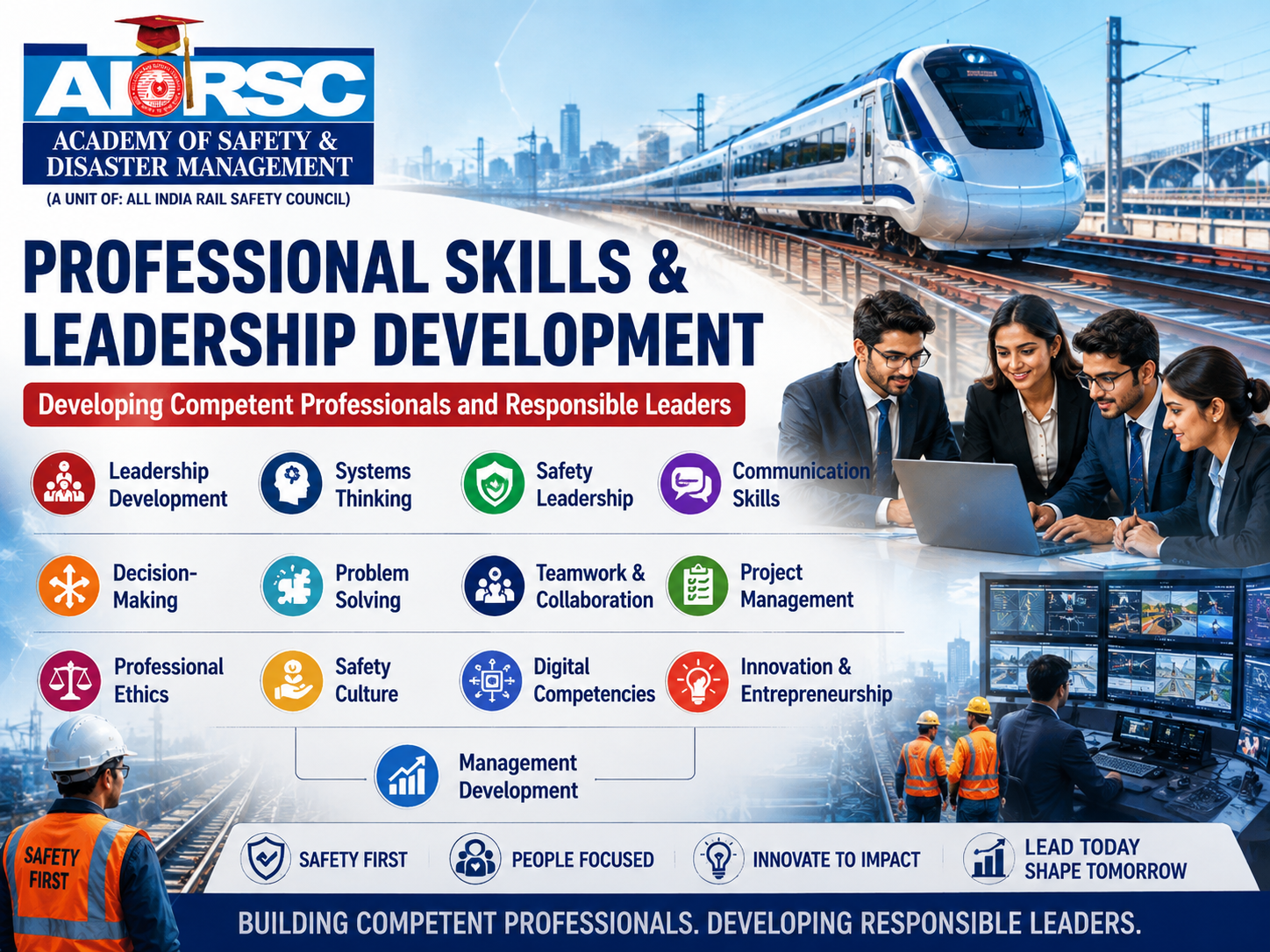
PROFESSIONAL SKILLS & LEADERSHIP DEVELOPMENT DEVELOPING COMPETENT PROFESSIONALS AND RESPONSIBLE LEADERS AIRSC ACADEMY OF SAFETY & DISASTER MANAGEMENT (AASDM) A UNIT OF THE ALL INDIA RAIL SAFETY COUNCIL (AIRSC) “Developing Knowledge • Building Competence • Inspiring Leadership • Strengthening the Culture of Safety” The AIRSC Academy of Safety & Disaster Management (AASDM) recognizes that the future of railway, metro, transportation, safety, infrastructure and disaster-management systems depends not only on advanced technology and technical expertise, but also on the quality of the professionals who plan, manage, operate and lead them. The Academy's Professional Skills & Leadership Development initiative is therefore designed to develop competent, ethical, confident and future-ready professionals capable of working effectively in complex, safety-critical and technology-driven environments. Through an integrated approach combining leadership development, systems thinking, safety management, communication, decision-making, problem solving, teamwork, project management, professional ethics, digital competencies, innovation and management development, AASDM seeks to bridge the important gap between academic knowledge and professional excellence. The objective is to prepare students, young professionals, engineers, managers and emerging leaders not merely for employment, but for meaningful professional responsibilities and long-term leadership roles. Leadership Development Leadership is an essential capability in every safety-critical organisation. AASDM encourages learners to develop the confidence, discipline, responsibility and strategic perspective required to lead people and organisations effectively. Leadership development focuses on professional accountability, organisational awareness, strategic thinking, people management, adaptability, resilience and the ability to inspire teams toward common objectives. Systems Thinking Modern railway and transportation networks are highly interconnected systems involving infrastructure, rolling stock, signalling, telecommunications, digital technologies, operations, human factors, passenger services, security and emergency management. AASDM promotes systems thinking so that professionals learn to understand these interdependencies, evaluate the wider consequences of decisions and approach complex challenges from an integrated perspective. Safety Leadership Safety leadership goes beyond compliance with procedures. It requires visible commitment, responsible behaviour, continuous learning and the ability to establish safety as a fundamental organisational value. AASDM seeks to develop professionals who can promote a strong safety-first culture, encourage proactive risk management, support incident prevention and lead teams with a clear commitment to protecting people, assets, infrastructure and operations. Communication Skills Effective communication is fundamental to professional performance, particularly in environments where accurate and timely information can influence operational and safety outcomes. Learners are encouraged to strengthen their professional writing, presentation, interpersonal communication, technical reporting, stakeholder engagement and workplace communication skills, enabling them to communicate with clarity, confidence and responsibility. Decision-Making Professionals working in railway, metro, infrastructure and disaster-management environments may be required to make important decisions under operational pressure, uncertainty or rapidly changing circumstances. AASDM promotes structured, evidence-based and risk-informed decision-making, helping learners evaluate available information, understand consequences, establish priorities and make responsible professional judgments. Problem Solving Complex industries require professionals who can identify problems systematically and develop practical solutions. The Academy promotes analytical and critical-thinking capabilities through approaches such as problem identification, root-cause thinking, risk assessment, solution evaluation and continuous improvement, encouraging learners to transform challenges into opportunities for better safety, efficiency and performance. Teamwork & Collaboration Safe and efficient transportation systems are built through coordinated multidisciplinary effort. AASDM emphasizes teamwork, mutual respect, knowledge sharing and collaborative problem solving. Learners are encouraged to work effectively across engineering, operations, safety, management, technology, research and administrative disciplines, preparing them for diverse professional environments. Project Management The ability to plan and deliver projects successfully is increasingly important across infrastructure and technology sectors. AASDM introduces learners to essential project-management competencies including planning, scheduling, resource coordination, risk management, quality management, stakeholder engagement, performance monitoring and project evaluation, supporting disciplined and accountable project execution. Professional Ethics Technical competence must always be supported by integrity. The Academy places strong emphasis on professional ethics, transparency, accountability, respect, fairness and responsible conduct. Learners are encouraged to understand that decisions in safety-critical sectors can have significant consequences for passengers, employees, organisations and society, making ethical judgment an essential component of professional excellence. Safety Culture A strong safety culture is created when safety becomes a shared organisational responsibility rather than simply a regulatory requirement. AASDM promotes awareness of human factors, behavioural safety, reporting culture, organisational learning, risk awareness and continuous improvement, helping future professionals understand their individual and collective responsibilities in preventing incidents and strengthening organisational resilience. Digital Competencies As railway and transportation systems become increasingly intelligent and connected, professionals must be prepared for digital transformation. AASDM encourages the development of competencies relevant to emerging technologies including Artificial Intelligence, data analytics, Internet of Things (IoT), digital twins, predictive technologies, automation, smart infrastructure and next-generation communication systems. The objective is to help learners understand how technology can support safer, smarter and more efficient transportation systems. Innovation & Entrepreneurship AASDM encourages learners to think beyond conventional solutions and develop an innovative professional mindset. Through exposure to design thinking, technology innovation, research, entrepreneurship, problem-solving and industry challenges, learners are encouraged to identify opportunities, develop practical ideas and contribute to new solutions for railway safety, mobility, infrastructure and disaster management. Management Development Technical professionals increasingly require strong managerial capabilities as they progress into positions of greater responsibility. AASDM's management-development approach seeks to strengthen understanding of strategic management, organisational behaviour, operations management, human-resource development, performance management, governance, leadership and change management, enabling professionals to combine technical competence with effective organisational leadership. From Education to Professional Excellence The Professional Skills & Leadership Development initiative reflects AASDM's commitment to education that extends beyond the classroom. Our aim is to develop individuals who possess the knowledge to understand, competence to perform, confidence to lead, integrity to serve and vision to innovate. By integrating technical education with professional skills, leadership capabilities, digital readiness, ethical values and a strong culture of safety, the AIRSC Academy of Safety & Disaster Management seeks to prepare a new generation of professionals capable of contributing meaningfully to India's railway, metro, transportation, infrastructure, safety and disaster-management sectors. As India advances towards Viksit Bharat 2047, the need for skilled, innovative and responsible professionals will continue to grow. AASDM aspires to contribute to this national journey by nurturing professionals who are prepared to embrace emerging technologies, manage complex systems, uphold the highest standards of safety and integrity, and provide responsible leadership for the transportation systems of tomorrow. WE DO NOT SIMPLY DEVELOP SKILLS — WE DEVELOP PROFESSIONAL CAPABILITY, RESPONSIBLE LEADERSHIP AND A LIFELONG COMMITMENT TO SAFETY AND EXCELLENCE. LEARN WITH PURPOSE. LEAD WITH INTEGRITY. INNOVATE WITH CONFIDENCE. SERVE WITH RESPONSIBILITY. BUILDING PROFESSIONALS FOR THE FUTURE PROFESSIONAL EXCELLENCE • SAFETY LEADERSHIP • DIGITAL COMPETENCE • ETHICAL RESPONSIBILITY • INNOVATION • NATION BUILDING AIRSC Academy of Safety & Disaster Management (AASDM) A Unit of the All India Rail Safety Council (AIRSC) BUILDING COMPETENT PROFESSIONALS. DEVELOPING RESPONSIBLE LEADERS. CREATING A SAFER FUTURE.
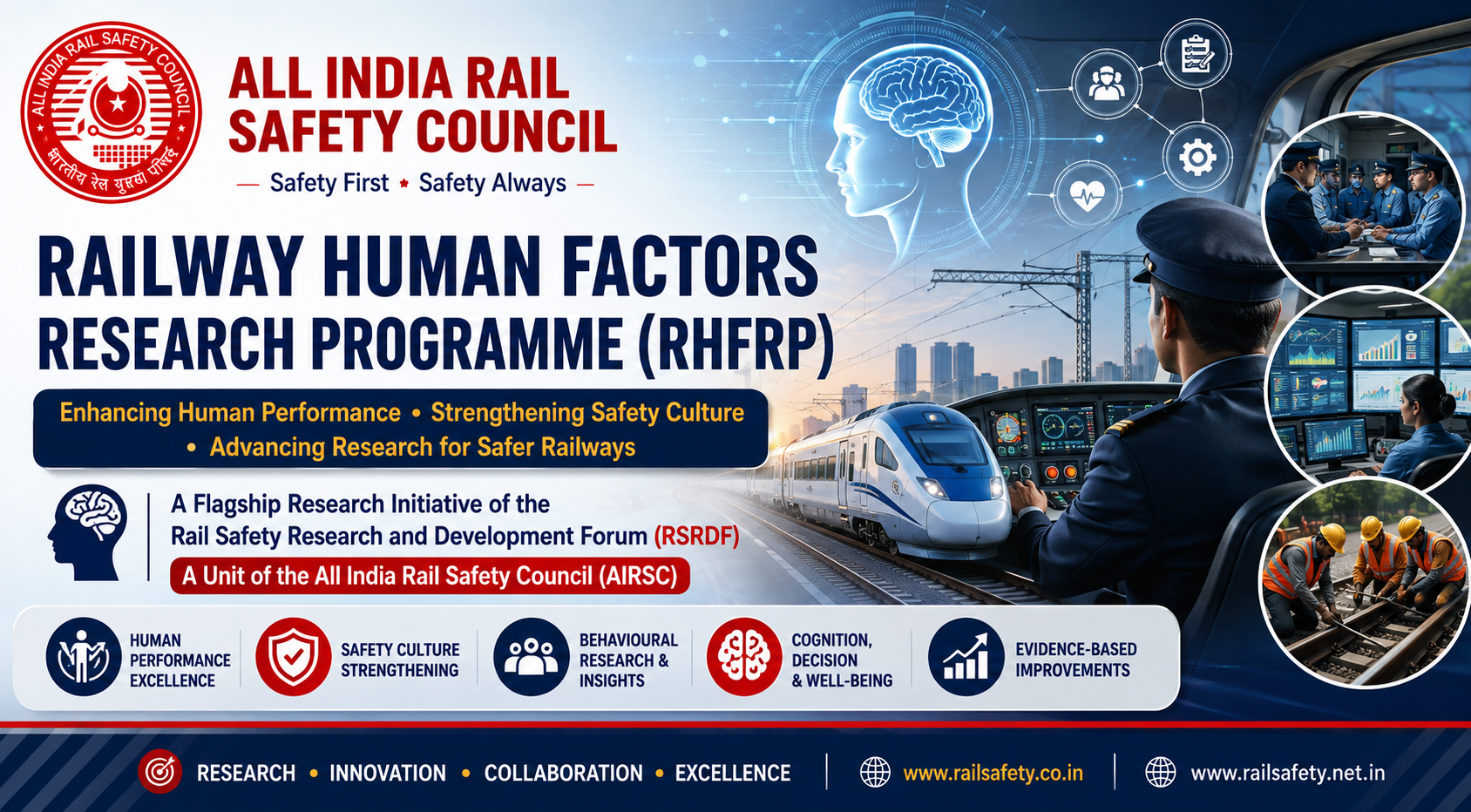
RAILWAY HUMAN FACTORS RESEARCH PROGRAMME (RHFRP) ENHANCING HUMAN PERFORMANCE • STRENGTHENING SAFETY CULTURE • ADVANCING RESEARCH FOR SAFER RAILWAYS A FLAGSHIP RESEARCH INITIATIVE OF THE RAIL SAFETY RESEARCH AND DEVELOPMENT FORUM (RSRDF) A UNIT OF THE ALL INDIA RAIL SAFETY COUNCIL (AIRSC) The Railway Human Factors Research Programme (RHFRP) is a flagship multidisciplinary research initiative of the Rail Safety Research and Development Forum (RSRDF), a unit of the All India Rail Safety Council (AIRSC), established to advance scientific understanding of the human elements that influence railway safety, operational performance, organisational resilience, and decision-making. While modern railway systems increasingly rely on advanced technologies such as Artificial Intelligence, Intelligent Signalling, Predictive Maintenance, Digital Railways, High-Speed Rail, and Smart Infrastructure, people remain central to every aspect of railway operations. Human judgement, communication, leadership, teamwork, competency, situational awareness, and organisational culture continue to play a decisive role in maintaining safe and efficient railway services. The Railway Human Factors Research Programme provides a national platform for research, innovation, education, policy development, and professional collaboration to better understand how human behaviour interacts with technology, infrastructure, and operational systems. Through evidence-based research and practical recommendations, the programme aims to minimise operational risks, improve workforce wellbeing, strengthen safety leadership, and foster a proactive safety culture across the railway sector. The programme aligns with the national priorities of Viksit Bharat 2047, Atmanirbhar Bharat, Digital India, Skill India, Make in India, and the United Nations Sustainable Development Goals (SDGs) by promoting research that places people at the centre of safe, resilient, and future-ready railway systems. Vision To establish India as a global leader in railway human factors research by promoting scientific excellence, behavioural safety, leadership development, and human-centred innovation that enhances the safety, reliability, and sustainability of railway transportation. Mission The Railway Human Factors Research Programme aims to: • Advance multidisciplinary research on human performance and railway safety. • Promote evidence-based strategies for reducing human error and operational risk. • Strengthen safety leadership and organisational culture. • Improve workforce wellbeing, competence, and resilience. • Support the design of human-centred technologies and work environments. • Encourage collaboration among railway organisations, academia, industry, and research institutions. • Develop practical recommendations that improve railway operations and public safety. Strategic Objectives Human-Centred Safety Promote research that integrates engineering, psychology, ergonomics, management, and behavioural sciences to improve the interaction between people, technology, and railway operations. Operational Excellence Enhance human performance through better training, communication, teamwork, competency management, and decision-support systems. Safety Culture Development Strengthen organisational values that encourage accountability, learning, reporting, continuous improvement, and shared responsibility for safety. Workforce Wellbeing Support research on occupational health, mental wellbeing, fatigue management, stress reduction, work-life balance, and employee engagement to improve long-term operational performance. Leadership and Decision-Making Develop leadership models and decision-support frameworks that enable managers and frontline personnel to respond effectively to routine operations, emergencies, and complex operational environments. Core Research Areas The programme promotes research in: • Human Factors Engineering • Behavioural Safety • Human Reliability Analysis • Safety Culture Assessment • Leadership and Organisational Behaviour • Crew Resource Management • Human-Machine Interface (HMI) • Ergonomics and Workplace Design • Fatigue and Alertness Management • Cognitive Workload Analysis • Situational Awareness • Decision-Making Under Pressure • Communication and Team Coordination • Safety Reporting and Learning Systems • Occupational Health and Wellbeing • Competency Management • Training Effectiveness • Emergency Response Behaviour • Passenger Behaviour and Public Safety • Human Factors in High-Speed Rail and Metro Rail • Human Factors in Digital Railway Systems • Artificial Intelligence and Human Interaction • Change Management and Digital Transformation Flagship Research Initiatives The Railway Human Factors Research Programme includes: • National Human Factors Research Mission • Railway Safety Behavioural Science Initiative • Human Performance Improvement Programme • Fatigue Risk Management Research Project • Railway Leadership Excellence Programme • Safety Culture Assessment Framework • Human-Machine Interface Innovation Project • Crew Resource Management Development Initiative • Passenger Behaviour and Public Safety Study • Workforce Wellbeing Research Programme • Railway Cognitive Safety Research Centre • Human Factors Knowledge Repository Research Methodology The programme adopts an evidence-based approach using: • Field Studies • Behavioural Observation • Accident and Incident Analysis • Human Reliability Assessment • Risk Assessment Techniques • Surveys and Questionnaires • Simulation-Based Research • Laboratory Studies • Case Studies • Data Analytics • Artificial Intelligence-Based Modelling • Operational Performance Evaluation • International Benchmarking Technology Integration The programme explores how emerging technologies can support human performance through: • Artificial Intelligence Decision Support • Digital Twins for Human-Centred Operations • Virtual Reality (VR) Training • Augmented Reality (AR) Learning • Smart Wearable Technologies • Human Performance Analytics • Intelligent Fatigue Monitoring • Predictive Safety Analytics • Advanced Driver Assistance Systems • Digital Competency Assessment Platforms These technologies complement human expertise by improving awareness, decision-making, training effectiveness, and operational safety. Capacity Building The programme supports professional development through: • Professional Certification Programmes • Executive Development Courses • Human Factors Leadership Training • Research Fellowships • Faculty Development Initiatives • Technical Workshops • National and International Conferences • Student Research Competitions • Internship Programmes • E-Learning Platforms • Behavioural Safety Seminars • Knowledge Exchange Forums Research Collaboration The programme encourages collaboration with: • Indian Railways • Metro Rail Corporations • Railway Production Units • Railway Public Sector Undertakings • Research Designs and Standards Organisation (RDSO) • IITs, NITs, Universities, and Engineering Institutions • Medical and Occupational Health Experts • Psychology and Human Behaviour Research Centres • Technology Companies • Professional Engineering Institutions • Government Departments • International Railway Organisations Collaborative research ensures that findings are scientifically robust, operationally relevant, and aligned with national and international best practices. Knowledge Dissemination The programme promotes the publication and sharing of knowledge through: • Research Journals • Technical Papers • White Papers • Human Factors Guidelines • Safety Bulletins • Best Practice Manuals • Case Studies • Technical Reports • National Conferences • International Symposia • Digital Knowledge Repository • Webinars and Expert Forums Expected Outcomes The Railway Human Factors Research Programme aims to achieve: • Stronger safety culture across railway organisations. • Improved human performance and operational reliability. • Reduction in human-factor-related safety risks. • Better leadership and decision-making capabilities. • Enhanced workforce health, wellbeing, and resilience. • Improved training systems and competency management. • Human-centred technology integration. • Greater collaboration between engineering, behavioural science, and operational disciplines. • Evidence-based policy recommendations for railway safety. • Internationally recognised research in railway human factors. National Significance Human performance remains one of the most critical elements of railway safety. By understanding how people interact with technology, infrastructure, procedures, and organisational systems, India can build a railway network that is not only technologically advanced but also safer, more resilient, and more responsive to operational challenges. The Railway Human Factors Research Programme contributes to national development by creating a scientific foundation for improving safety, strengthening workforce capability, enhancing public confidence, and supporting sustainable railway growth. The Rail Safety Research and Development Forum (RSRDF) is committed to promoting research that recognises people as the cornerstone of railway safety. Through the Railway Human Factors Research Programme, we seek to unite engineers, psychologists, safety professionals, railway administrators, academic institutions, researchers, healthcare experts, and policymakers in developing practical, research-driven solutions that improve human performance and operational excellence. By combining behavioural science, engineering innovation, and professional leadership, the programme will help shape a future where every railway employee is empowered, every operational decision is informed, and every journey is safer. As India moves towards Viksit Bharat 2047, RHFRP will play a pivotal role in building a world-class railway system founded on knowledge, competence, innovation, and an enduring commitment to protecting human life. "PEOPLE FIRST • PERFORMANCE ALWAYS • SAFETY WITHOUT COMPROMISE." "UNDERSTANDING HUMAN BEHAVIOUR TO BUILD SAFER RAILWAYS."
AIRSC RAIL SAFETY NEWS (A Unit of the All India Rail Safety Council – AIRSC) BI-MONTHLY JOURNAL ON RAILWAY SAFETY, OPERATIONS & INNOVATION AIRSC Rail Safety News is a prestigious bi-monthly knowledge journal dedicated to advancing excellence in railway safety, operational efficiency, capacity management, and technological innovation across the railway sector. Published under the aegis of the All India Rail Safety Council (AIRSC), the magazine serves as a strategic knowledge platform bringing together professionals, policymakers, researchers, and industry leaders to contribute to the continuous improvement of railway systems in India and globally. The publication is designed to support the transformation of railway networks into safe, smart, sustainable, and globally competitive transport systems, aligned with national priorities such as Viksit Bharat 2047, Atmanirbhar Bharat, and Net Zero 2070. Mission To enhance the quality, safety, and efficiency of railway services for passengers and freight by promoting knowledge, innovation, and best practices in railway operations, planning, and management. AIRSC Rail Safety News aims to: • Serve as a trusted platform for knowledge exchange and professional dialogue • Promote innovation, research, and technological advancement • Strengthen safety awareness and operational excellence • Support evidence-based decision-making in railway systems Scope and Coverage The magazine provides comprehensive coverage across all railway segments, including: • Light Rail Systems • Metro Rail Networks • Conventional (Heavy) Railways • High-Speed Rail Systems It addresses both passenger and freight transport, focusing on improving system performance, safety, and customer experience. Core Content Areas 1. Railway Safety & Operations • Safety management systems and operational best practices • Accident prevention strategies and risk mitigation • Passenger safety, station security, and travel safety awareness • Guidance and updates from Railway Protection Force (RPF) • Rail e-safety, cybersecurity, and digital safety solutions 2. Capacity Management & Timetabling • Traffic demand estimation and forecasting • Network capacity optimization and utilization • Train scheduling, crew management, and dispatching systems • Design and optimization of railway timetables 3. Technology & Innovation • Advanced signalling and train control systems • Automatic Train Operation (ATO) and smart railway technologies • AI-driven analytics and predictive safety tools • Rolling stock optimization and energy efficiency solutions 4. Research & Professional Contributions • Original research papers and theoretical studies • Transport planning models and system engineering approaches • Pilot projects and technical feasibility analyses • Impact assessment studies and policy insights 5. Business, Policy & Management • Innovative business models and financing strategies • Infrastructure planning and investment frameworks • Railway economics and performance optimization • Policy analysis and governance models 6. Education, Awareness & Outreach • Children’s railway safety awareness initiatives • Student engagement programmes, seminars, and workshops • Industrial training and academic collaborations • Railway heritage, museums, and educational insights 7. Events, Recognition & Industry Updates • Coverage of national and international conferences, seminars, and forums • AIRSC awards and recognitions • Key developments in Indian Railways and metro systems Interdisciplinary Integration AIRSC Rail Safety News integrates expertise from diverse disciplines, including: • Engineering and system design • Transport modeling and traffic analysis • Mathematics and physics • Computer science and data analytics • Economics and business management • Public policy and governance This interdisciplinary approach ensures a holistic understanding of railway systems, enabling innovative and practical solutions. Editorial Vision The journal aspires to become a global reference platform for railway safety and operations, fostering a Network of Excellence that connects: • Academicians and researchers • Railway operators and infrastructure managers • Government agencies and policymakers • Industry leaders and technology providers It promotes the exchange of ideas and strategies that enhance efficiency, safety, punctuality, and sustainability of railway transport systems. Types of Contributions The magazine welcomes high-quality contributions, including: • Original research articles and technical papers • Case studies and best practice reports • Transport and business plans • Pilot project analyses and feasibility studies • Policy reviews and impact assessments • Innovation showcases and technology insights Strategic Significance AIRSC Rail Safety News plays a vital role in: • Strengthening railway safety knowledge and awareness • Supporting data-driven and research-based decision-making • Promoting innovation and global best practices • Enhancing collaboration between academia, industry, and government Our Vision To create a globally recognized knowledge platform that drives innovation, collaboration, and excellence in railway safety, planning, and operations—contributing to a safe, efficient, and future-ready railway ecosystem. A Message to Contributors and Readers As one of the largest railway networks in the world, Indian Railways is truly the “Lifeline to the Nation.” Ensuring its safety, efficiency, and sustainability is a shared responsibility. Through AIRSC Rail Safety News, we invite professionals, researchers, and stakeholders to: “Become a Voice for a Better India” Your knowledge, insights, and innovations can help shape the future of railway safety and contribute to building a safer, smarter, and more resilient railway system for generations to come. AIRSC Rail Safety News is more than a publication—it is a platform for transformation, collaboration, and thought leadership in the railway sector. By bringing together expertise, innovation, and global perspectives, the magazine continues to play a crucial role in advancing railway safety excellence and operational efficiency at both national and international levels.
AIRSC ACADEMY OF SAFETY AND DISASTER MANAGEMENT National Centre for Railway Safety Excellence The AIRSC Academy of Safety and Disaster Management, a premier unit of the All India Rail Safety Council (AIRSC), is a nationally recognized centre of excellence dedicated to advancing professional capability, technical expertise, and leadership in railway safety and disaster management. Established with a forward-looking vision, the Academy serves as a strategic platform that integrates knowledge, technology, and practical expertise to build a highly competent and future-ready railway safety workforce. It plays a vital role in supporting India’s national priorities, including Viksit Bharat 2047, Atmanirbhar Bharat, and Net Zero 2070, by ensuring that safety remains the foundation of railway modernization and sustainable development. Our Institutional Philosophy “We Are Creating Professionals, Not Just Students.” This guiding principle reflects the Academy’s commitment to transforming learners into skilled, responsible, and industry-ready safety professionals. The focus is not merely on academic instruction, but on developing competence, discipline, leadership, and real-world problem-solving capability essential for railway safety excellence. About the Academy The Academy functions as a specialized national institution for training, certification, and research-driven learning in railway safety and disaster management. Its programs are aligned with international safety standards, global best practices, and emerging technologies, ensuring relevance in both national and global contexts. It caters to: • Railway professionals and engineers • Safety regulators and auditors • Disaster management authorities • Industry stakeholders and contractors • Emergency response personnel • Students and emerging professionals Student Training Programmes The Academy offers structured and career-oriented training programmes for students and young professionals, designed to bridge the gap between academic learning and industry requirements. Programme Highlights • Foundation in Railway Safety Systems Introduction to railway operations, safety principles, and system-wide risk management. • Practical Skill Development Hands-on exposure to safety practices, inspection methods, and operational procedures. • Disaster Preparedness Training Basic emergency response, evacuation procedures, and safety drills. • Industrial Safety Awareness Workplace safety, hazard identification, and safe work practices. • Technology Exposure Introduction to modern safety technologies, digital systems, and smart railway solutions. • Internships & Field Exposure Opportunities for real-world learning through site visits, case studies, and industry interaction. • Career Pathways in Rail Safety Guidance on professional opportunities in railway safety, infrastructure, and disaster management. Outcome Students graduating from these programmes are equipped to become: • Entry-level safety professionals • Safety supervisors and inspectors • Disaster response support personnel • Future leaders in railway safety and infrastructure sectors Core Training Programmes Railway Safety Management Systems (SMS) • Safety governance and regulatory frameworks • Risk assessment and mitigation strategies • Safety performance monitoring • Incident prevention and reporting systems Disaster Management & Emergency Response • Railway disaster preparedness and resilience planning • Incident Command System (ICS) • Fire, derailment, and collision response • Emergency evacuation and rescue operations • Technical Safety Training • Track and infrastructure safety • Electrical and mechanical systems safety • Signaling and operational safety • Maintenance and inspection protocols Occupational Safety & Industrial Risk Prevention • Workplace hazard identification and control • PPE and safe work practices • Human factors and fatigue management • Industrial safety compliance Safety Leadership & Culture Development • Leadership in safety decision-making • Behaviour-based safety practices • Safety culture transformation • Organizational safety excellence Advanced & Specialized Programmes • Rail Safety Audit & Risk Assessment • Accident Investigation & Root Cause Analysis • AI-Based Safety Monitoring & Predictive Risk Analytics • Climate-Resilient Railway Safety • Safety for High-Speed & Modern Rail Systems • Cybersecurity in Railway Operations Training Methodology The Academy adopts a blended, experiential, and outcome-oriented learning approach: • Classroom and technical sessions • Simulation-based learning • Case study and incident analysis • Practical safety drills and field exercises • Workshops and expert interaction • Digital and e-learning modules Research, Innovation & Knowledge Development The Academy also serves as a hub for: • Applied research in railway safety • Development of safety standards and frameworks • Knowledge dissemination through publications • Collaboration with national and international institutions Objectives • Develop a highly skilled and industry-ready railway safety workforce • Strengthen national safety capability and institutional excellence • Promote professionalism, ethics, and leadership in safety • Support Vision Zero – elimination of fatalities and major accidents • Encourage innovation and technology adoption in safety systems Strategic Significance The AIRSC Academy acts as a national catalyst for safety excellence, bridging the gap between education, industry, and policy. It ensures that the next generation of professionals is equipped to meet the challenges of modern railway systems with confidence and competence. The AIRSC Academy of Safety and Disaster Management is committed to shaping individuals into capable professionals, responsible leaders, and safety ambassadors. By fostering knowledge, discipline, and innovation, the Academy contributes to building a Safer, Smarter, and More Resilient Railway Ecosystem for India and the world.
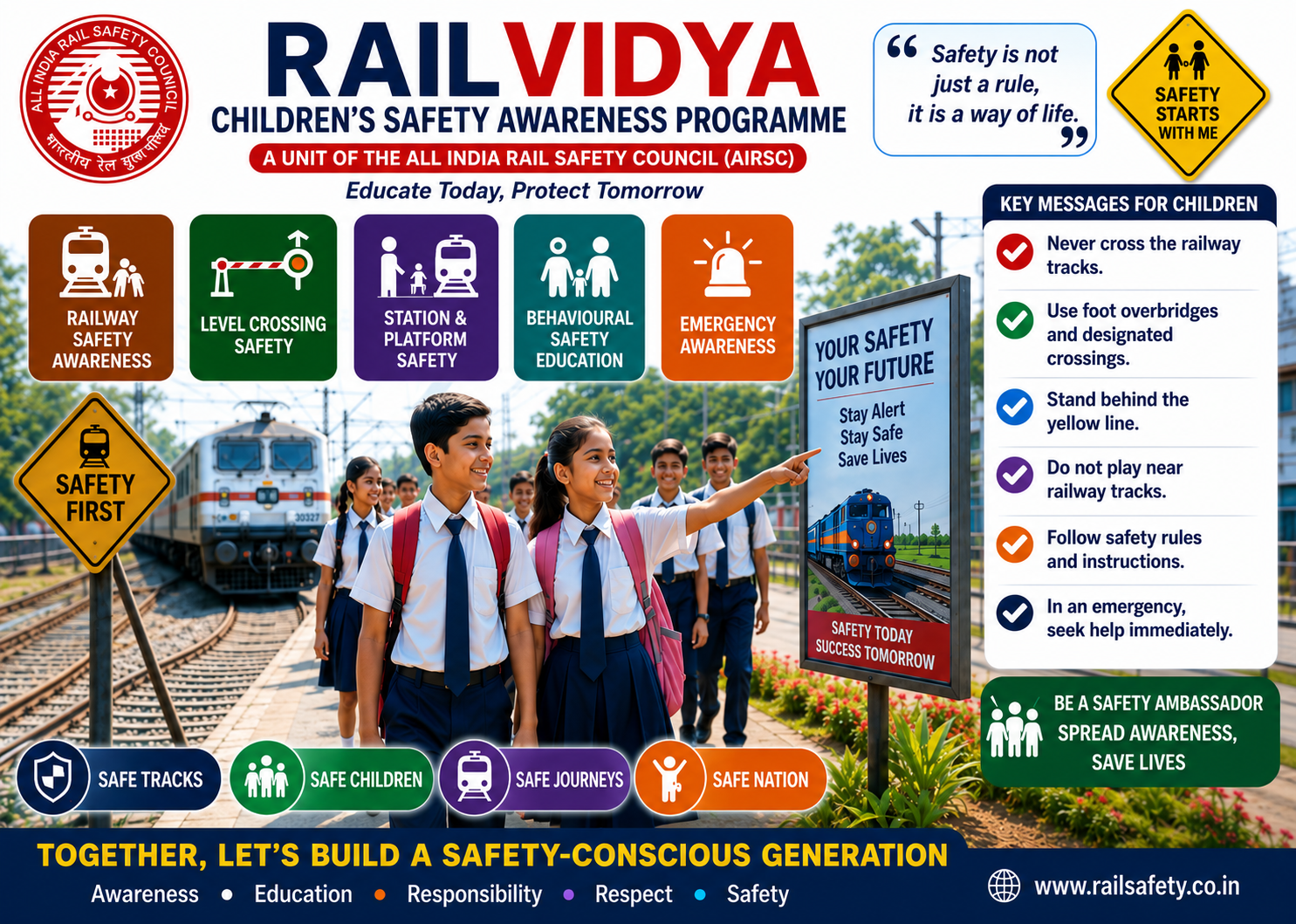
RAILVIDYA – CHILDREN’S SAFETY AWARENESS PROGRAMME A Unit of the All India Rail Safety Council (AIRSC) RailVidya – Children’s Safety Awareness Programme is a flagship social and educational initiative of the All India Rail Safety Council (AIRSC), dedicated to promoting safety awareness among children and young learners across India. Recognizing that children are among the most vulnerable users of railway environments, RailVidya has been conceptualized as a national mission to educate, empower, and protect young lives through structured safety awareness, behavioral education, and community engagement. The programme aims to instill life-saving knowledge, responsible behavior, and safety consciousness at an early age—ensuring that children grow into informed, disciplined, and safety-aware citizens. The Importance of Children’s Railway Safety Railway systems are complex, high-speed, and high-risk environments where even minor negligence can lead to serious consequences. Children, due to their natural curiosity, limited risk perception, and lack of awareness, are particularly vulnerable near railway tracks, stations, and crossings. Why This Programme is Critical • Prevention of Accidents and Fatalities A significant number of railway-related incidents involve unsafe behavior such as trespassing, crossing tracks, or playing near railway lines. • Early Safety Education Instilling safety awareness at a young age creates lifelong responsible habits and risk-conscious behavior. • Community-Level Impact Children act as safety ambassadors, spreading awareness within families and communities. • Supporting National Safety Goals Contributes to Vision Zero – Zero Fatalities and Major Accidents in railway systems. • Building a Safety Culture Encourages a culture of discipline, responsibility, and respect for public infrastructure. Programme Objectives • To educate children on safe behavior in and around railway environments • To reduce incidents caused by unsafe practices such as trespassing and negligence • To promote awareness of railway signals, warnings, and hazards • To build a safety-first mindset among young citizens • To support national efforts in creating a safe and responsible society Key Focus Areas Railway Safety Awareness • Dangers of crossing railway tracks • Importance of using foot overbridges and designated crossings • Awareness of moving trains and platform safety Level Crossing Safety • Understanding railway gates and warning signals • Risks associated with unmanned crossings • Safe practices for pedestrians and school children Station & Platform Safety • Safe boarding and deboarding practices • Avoiding overcrowding and unsafe movements • Awareness of gaps between train and platform Behavioural Safety Education • Discipline and patience in public spaces • Respect for safety rules and infrastructure • Avoiding risky behaviors such as playing near tracks Emergency Awareness • Basic understanding of emergency situations • How to respond and seek help • Awareness of railway helplines and safety personnel Programme Delivery Approach RailVidya adopts an interactive, engaging, and child-friendly approach to learning: • School-based awareness sessions • Interactive workshops and safety demonstrations • Audio-visual presentations and animations • Safety campaigns and community outreach programmes • Distribution of educational materials and safety guides • Participation of railway professionals and safety experts Target Audience • School students (Primary, Secondary, and Higher Secondary) • Children living near railway tracks and crossings • Educational institutions and community groups • Parents and teachers as key influencers Strategic Impact RailVidya contributes to: • Reduction in preventable railway accidents involving children • Improved public awareness and community safety culture • Strengthening of national railway safety initiatives • Long-term behavioral transformation in society Integration with National Vision The programme aligns with: • Vision Zero – Eliminating fatalities and major accidents • Viksit Bharat 2047 – Building a safe and developed nation • Sustainable Development Goals (SDGs) – Promoting safe, inclusive communities The RailVidya Children’s Safety Awareness Programme reflects AIRSC’s commitment to protecting young lives and building a safety-conscious future generation. We believe that safety education for children is not optional—it is essential. By empowering children with knowledge and awareness today, we are securing a safer tomorrow. RailVidya is more than an awareness initiative—it is a national movement towards safeguarding the future of our children. Through education, engagement, and empowerment, the programme aims to create a generation that values safety, respects infrastructure, and contributes to a safer, smarter, and more responsible India.
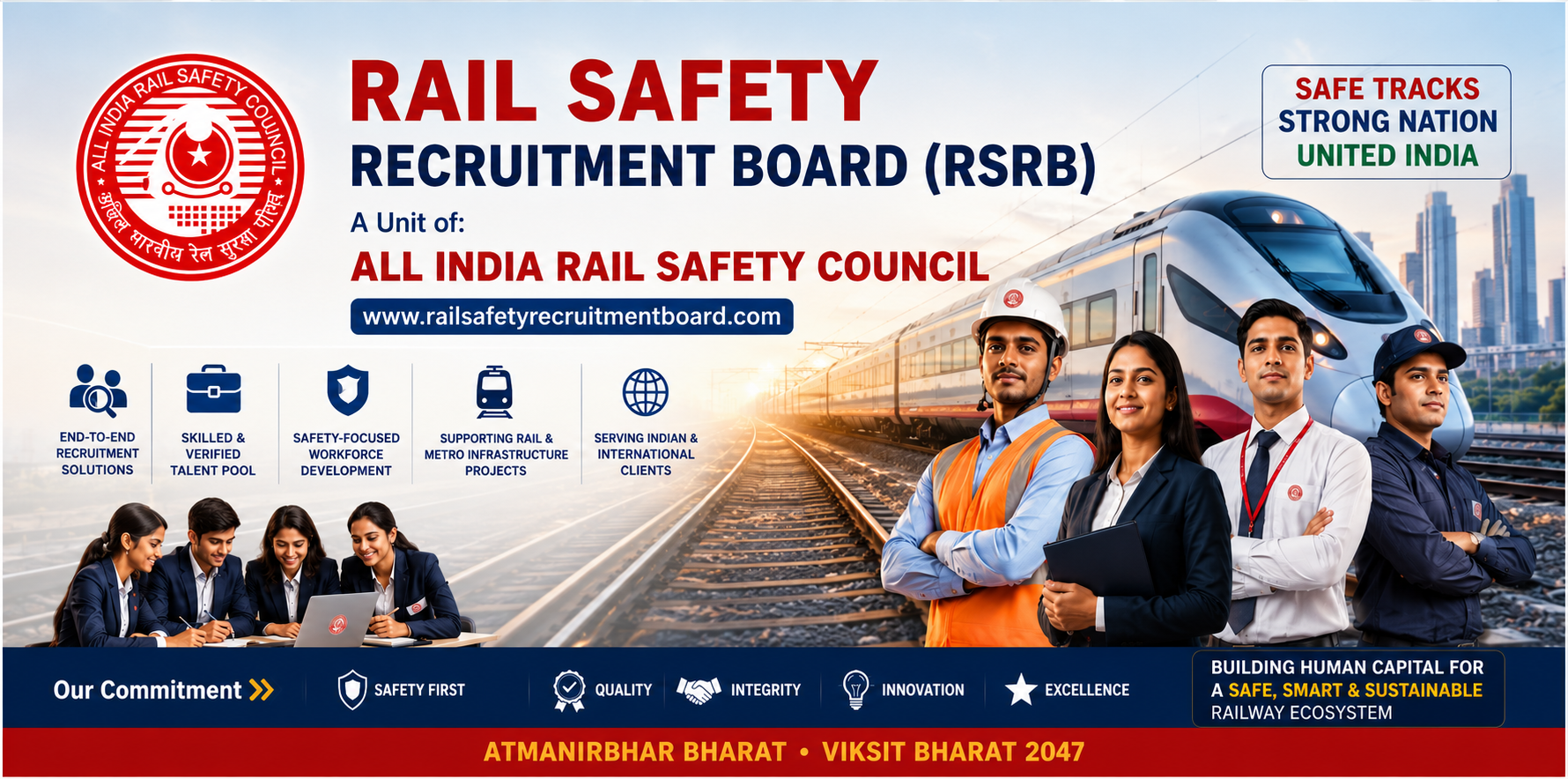
RAIL SAFETY RECRUITMENT BOARD (RSRB) A Unit of the All India Rail Safety Council (AIRSC) Building Skilled Workforce for Safe, Smart & Future-Ready Rail Systems The RAIL SAFETY RECRUITMENT BOARD (RSRB) is a premier recruitment and workforce development platform established by the All India Rail Safety Council (AIRSC) to address the growing demand for highly skilled, safety-oriented, and technically competent professionals in the rail and metro sectors. Positioned as a strategic talent gateway, RSRB operates under a unified framework to deliver end-to-end recruitment solutions for both Indian and international clients, supporting large-scale infrastructure projects and next-generation railway systems. With a strong focus on quality, safety, and operational excellence, RSRB plays a critical role in strengthening human capital for the rapidly evolving railway ecosystem, aligned with national priorities such as Atmanirbhar Bharat and Viksit Bharat 2047. About the All India Rail Safety Council (AIRSC) The All India Rail Safety Council (AIRSC), headquartered in New Delhi, is a nationally recognized institution known for its leadership in railway safety, research, training, and advisory services. AIRSC’s key capabilities include: Real-time incident monitoring and safety intelligence systems Advanced analytical safety reporting and risk assessment Crisis management, emergency response, and mapping solutions Professional training, certification, and capacity-building programmes With a global outlook, AIRSC fosters a research-driven and innovation-oriented environment, contributing to the continuous improvement of railway safety standards and operational performance. Our Vision To bridge the talent and skill gap in the rail and metro sectors by delivering highly trained, safety-conscious, and industry-ready professionals, thereby supporting sustainable infrastructure growth and global competitiveness. Our Mission To provide integrated, efficient, and high-quality recruitment solutions that align with industry needs, enhance workforce capability, and promote a culture of safety and professionalism across railway systems. Recruitment Ecosystem RSRB functions as a comprehensive recruitment platform, connecting: Job Seekers Fresh graduates and diploma holders Engineers and technical specialists Skilled technicians and supervisors Apprentices and trainees Retired railway professionals seeking redeployment Employers Railway and metro project authorities Infrastructure developers and EPC contractors Manufacturing and engineering companies Consultancy firms and system integrators International rail and transport organizations RSRB maintains a diverse and highly specialized talent pool across key technical and operational domains: Mechanical & Electrical Engineering Signalling & Telecommunications Systems Civil & Structural Engineering Railway Operations & Maintenance Manufacturing & Industrial Systems Safety, Quality & Risk Management Recruitment Services RSRB offers end-to-end, customized recruitment solutions, including: Talent sourcing and screening Technical evaluation and competency assessment Safety-oriented candidate profiling Bulk recruitment for large-scale projects Executive search for leadership roles Contractual, permanent, and project-based hiring Our processes are designed to ensure efficiency, transparency, and alignment with client-specific technical and operational requirements. Growing Demand in Rail & Metro Sector India’s railway and metro sectors are undergoing unprecedented expansion, driven by infrastructure development across more than 20 cities and major national projects. This growth is creating significant demand for: Skilled engineers and technicians Project management professionals Safety and compliance experts Operations and maintenance personnel Under the vision of Atmanirbhar Bharat, RSRB actively promotes local talent development, enabling Indian professionals to contribute to the nation’s infrastructure transformation and global competitiveness. Educational & Training Integration RSRB is uniquely supported by AIRSC’s institutional ecosystem, ensuring a strong linkage between training and employment: AIRSC Academy of Safety and Disaster Management – Advanced safety training, certification, and skill development University of Rail Safety Technology and Management (Upcoming) – Specialized academic and research programmes in railway systems This integration ensures that candidates are not only qualified but also industry-ready, safety-trained, and future-oriented. Why Partner with RSRB? Strategic Partnership Approach Dedicated account management teams work closely with clients to understand technical, operational, and administrative requirements. Comprehensive Recruitment Solutions • Campus recruitment and early talent engagement • Hiring of experienced professionals • Redeployment of retired experts • Project-based and large-scale workforce mobilization Quality & Safety Focus Every candidate is evaluated with a strong emphasis on technical competence, safety awareness, and professional integrity. Customized & Timely Delivery Tailored recruitment strategies ensure efficient, reliable, and timely hiring outcomes. Key Recruitment Initiatives Campus placement programmes for fresh talent Specialized hiring for metro and high-speed rail projects Workforce mobilization for infrastructure expansion Redeployment of experienced and retired railway professionals Skill development and employment linkage programmes Strategic Significance RSRB plays a vital role in: Strengthening the railway workforce ecosystem Enhancing safety and operational performance Supporting large-scale infrastructure development Bridging the gap between education, training, and employment The Rail Safety Recruitment Board (RSRB) is committed to becoming the partner of choice for the rail and metro industry by delivering qualified, reliable, and safety-trained professionals. We believe that human capital is the foundation of safe and efficient railway systems. Through excellence in recruitment, training integration, and strategic collaboration, RSRB contributes to building a safer, smarter, and more resilient railway future. As railway systems evolve in scale and complexity, the need for skilled, safety-oriented, and future-ready professionals becomes increasingly critical. Through its integrated approach, RSRB is not just a recruitment platform—it is a strategic enabler of workforce excellence, supporting India’s journey towards Viksit Bharat 2047 and positioning the nation as a global leader in railway infrastructure and safety.
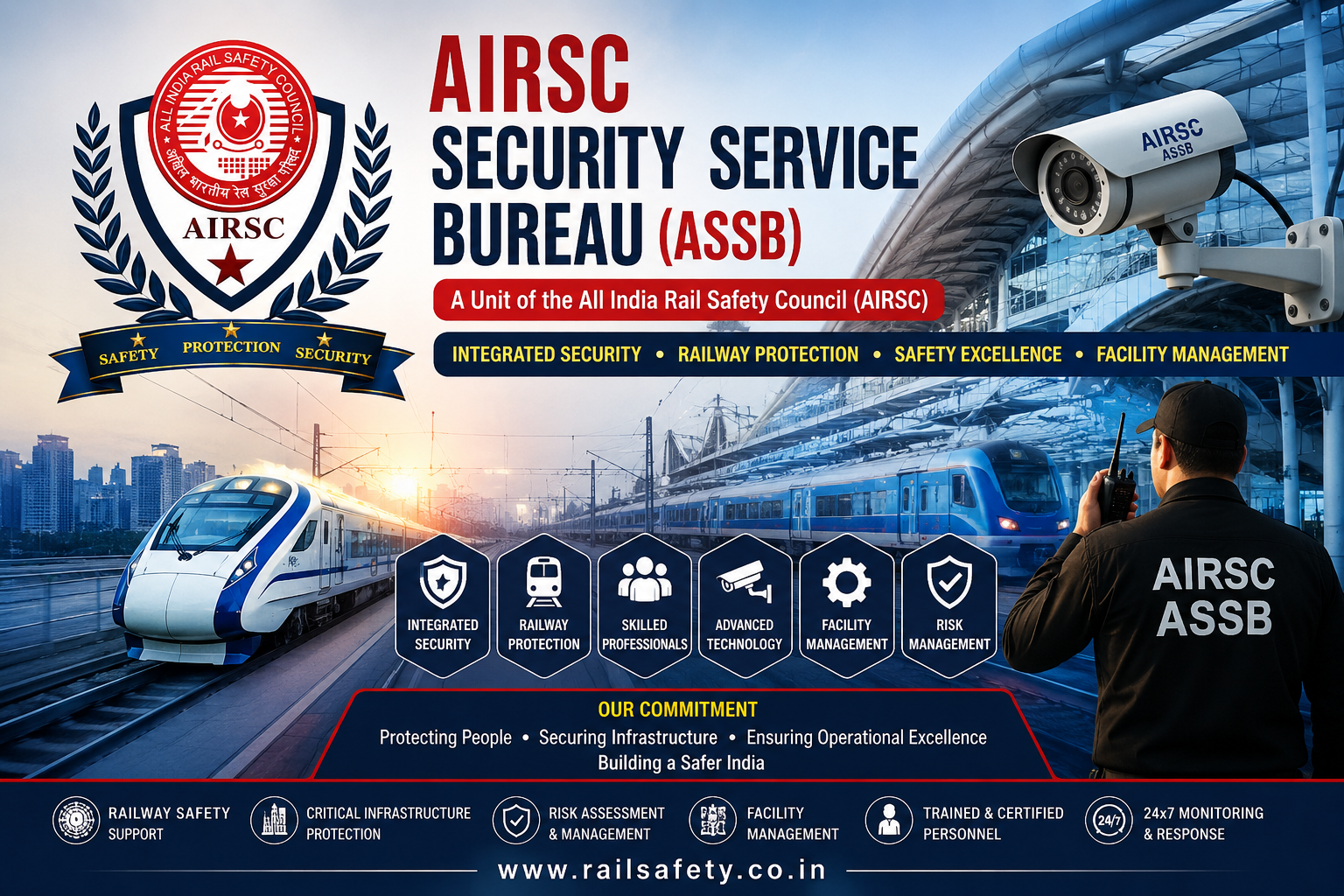
AIRSC SECURITY SERVICE BUREAU (ASSB) A Unit of the All India Rail Safety Council (AIRSC) Integrated Security • Railway Protection • Safety Excellence • Facility Management AIRSC Security Service Bureau (ASSB), a flagship unit of the All India Rail Safety Council (AIRSC), is a professionally managed, technology-driven organization specializing in integrated security services, railway safety support, facility management, risk management, and critical infrastructure protection. Established with a vision of strengthening India's safety and security ecosystem, ASSB delivers comprehensive solutions for railways, metro rail systems, transportation infrastructure, government organizations, public institutions, industrial establishments, logistics hubs, commercial complexes, healthcare facilities, educational institutions, airports, ports, residential communities, and corporate enterprises. Combining highly trained professionals with advanced digital technologies, ASSB provides intelligent, reliable, and cost-effective security solutions designed to protect people, infrastructure, operations, assets, and organizational reputation. As an initiative of the All India Rail Safety Council, ASSB places special emphasis on supporting the evolving safety requirements of Indian Railways, Metro Rail Systems, High-Speed Rail Corridors, Dedicated Freight Corridors, Railway Stations, Rail Workshops, Depots, Industrial Rail Infrastructure, and Railway Construction Projects, while also serving organizations across multiple sectors. Our Vision To become India's most trusted integrated security, railway safety, and facility management organization by delivering innovative, technology-enabled, and professionally managed solutions that contribute towards a safer, smarter, resilient, and future-ready nation. ASSB aspires to support the national vision of Viksit Bharat 2047, Atmanirbhar Bharat, Digital India, and Net Zero 2070 by promoting world-class security standards, operational excellence, workforce professionalism, and sustainable safety practices. Our Mission Our mission is to empower organizations by providing a single integrated platform offering comprehensive: • Integrated Security Services • Railway Safety Support Services • Industrial Safety Management • Facility Management Solutions • Risk Assessment & Security Audits • Emergency Response & Crisis Management • Disaster Preparedness Services • Technology-Based Security Solutions • Smart Surveillance & Command Centre Support • Professional Security Training & Capacity Building We are committed to protecting people, property, operations, information, infrastructure, and business continuity through innovative technologies, highly trained professionals, and internationally accepted best practices. Our Philosophy "Security is not merely guarding an asset—it is protecting confidence, continuity, and the future." At ASSB, we believe that true security combines: • Professional manpower • Intelligent technology • Ethical leadership • Continuous monitoring • Preventive risk management • Rapid emergency response • Customer-focused service delivery Our integrated approach creates safer workplaces while enabling organizations to focus on their core business with complete confidence. Railway Safety & Security Excellence Being a specialized unit of the All India Rail Safety Council, ASSB possesses unique expertise in railway and metro safety environments. Our railway-focused services include: • Railway Station Security Management • Passenger Safety Support • Platform Safety Monitoring • Crowd Management • Railway Infrastructure Protection • Depot & Workshop Security • Railway Construction Project Security • Trackside Security Support • Railway Asset Protection • Level Crossing Safety Support • Railway Emergency Response Coordination • Disaster Preparedness Assistance • Railway Event Security • Railway Safety Awareness Programmes • Safety Compliance Support • Security Risk Assessment • Railway Facility Management • Smart Railway Surveillance Systems • Access Control & Visitor Management • Integrated Railway Security Operations ASSB works towards strengthening railway safety through a combination of operational excellence, trained manpower, technology integration, and safety awareness. Technology-Driven Security Solutions ASSB leverages advanced technologies to deliver proactive and intelligent security management solutions, including: • AI-Based Video Analytics • Intelligent CCTV Monitoring • Centralized Security Operations Centre (SOC) • Command & Control Centre Integration • GPS Fleet Monitoring • Access Control Systems • Biometric Attendance Systems • Visitor Management Solutions • Incident Management Platforms • Mobile Patrol Monitoring • IoT-Based Security Devices • Digital Reporting Systems • Emergency Alert Systems • Cloud-Based Security Management • Cyber-Physical Security Coordination • Smart Perimeter Protection • Electronic Surveillance Solutions Our technology-enabled services improve situational awareness, accelerate response times, and enhance operational efficiency. Integrated Facility Management Services ASSB offers comprehensive facility management services designed to support efficient and secure business operations, including: • Housekeeping Services • Technical Facility Maintenance • Electrical & Mechanical Support • Fire Safety Management • Reception & Front Office Services • Horticulture & Landscaping • Pest Management • Waste Management • Utility Management • Building Maintenance • Workforce Support Services • Office Administration Support • Industrial Facility Services • Institutional Facility Management Security Operations Centre (SOC) ASSB operates a professionally managed Security Operations Centre capable of providing: • 24×7 Continuous Monitoring • Threat Detection • Incident Analysis • Security Intelligence • Vulnerability Assessment • Emergency Response Coordination • Alarm Monitoring • CCTV Monitoring • Risk Escalation Management • Security Reporting • Compliance Monitoring Our experienced professionals continuously monitor client environments to identify, assess, and respond to potential security threats before they impact operations. Professional Workforce ASSB employs highly trained professionals including: • Security Officers • Railway Safety Professionals • Industrial Safety Experts • Fire & Emergency Personnel • Surveillance Operators • Facility Management Specialists • Risk Assessment Consultants • Security Supervisors • Technical Support Engineers • Operations Managers • Customer Service Professionals Every member of our workforce undergoes structured training, continuous skill development, and professional evaluation to ensure service excellence. Our Core Values • Integrity • Professionalism • Accountability • Reliability • Innovation • Customer Commitment • Excellence • Safety First • Continuous Improvement • Ethical Business Practices Why Choose ASSB? • Specialized Railway & Metro Safety Expertise • Unit of the All India Rail Safety Council • Integrated Security & Facility Management Solutions • Highly Skilled Security Professionals • Technology-Driven Operations • 24×7 Security Monitoring • Customized Client Solutions • Affordable and Scalable Services • Strong Compliance & Risk Management Framework • Rapid Emergency Response Capability • Customer-Centric Service Delivery • Commitment to Quality, Safety, and Excellence AIRSC Security Service Bureau (ASSB), we recognize that modern organizations require more than traditional security services—they require intelligent, integrated, technology-enabled solutions that proactively manage risk while ensuring uninterrupted operations. Our commitment extends beyond protecting physical assets. We strive to build resilient organizations by safeguarding people, strengthening operational continuity, enhancing public confidence, and supporting national infrastructure security. As India advances towards becoming a global economic and technological leader, ASSB remains dedicated to contributing to a safe, secure, smart, and sustainable future through professional excellence, innovation, and unwavering commitment to railway safety and integrated security management. AIRSC Security Service Bureau (ASSB) A Unit of the All India Rail Safety Council (AIRSC) Protecting People • Securing Infrastructure • Strengthening Rail Safety • Enabling a Safer India
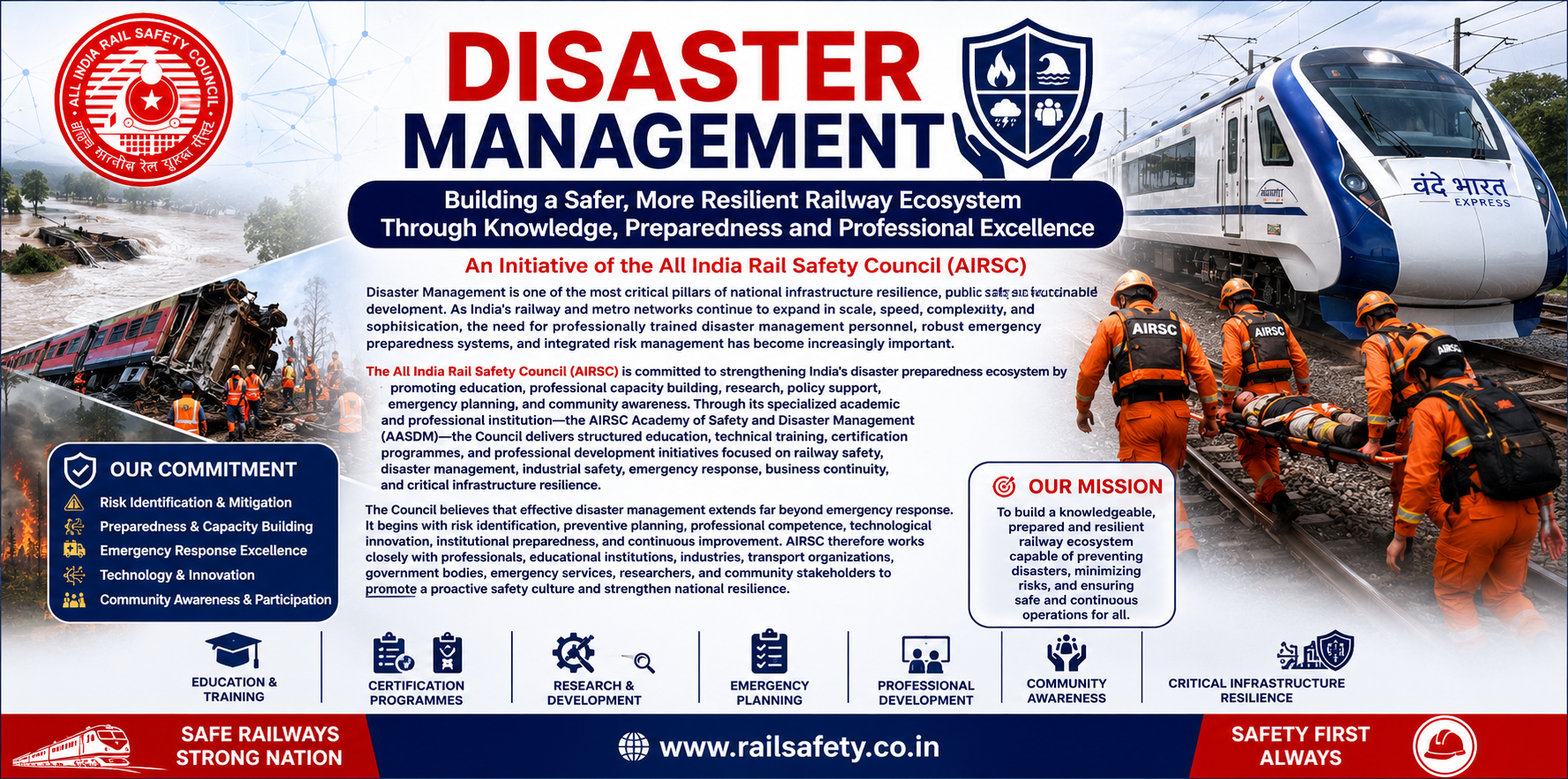
AIRSC Disaster Management Building a Safer, More Resilient Railway Ecosystem Through Knowledge, Preparedness and Professional Excellence An Initiative of the All India Rail Safety Council (AIRSC) Disaster Management is one of the most critical pillars of national infrastructure resilience, public safety, and sustainable development. As India's railway and metro networks continue to expand in scale, speed, complexity, and technological sophistication, the need for professionally trained disaster management personnel, robust emergency preparedness systems, and integrated risk management has become increasingly important. The All India Rail Safety Council (AIRSC) is committed to strengthening India's disaster preparedness ecosystem by promoting education, professional capacity building, research, policy support, emergency planning, and community awareness. Through its specialized academic and professional institution—the AIRSC Academy of Safety and Disaster Management (AASDM)—the Council delivers structured education, technical training, certification programmes, and professional development initiatives focused on railway safety, disaster management, industrial safety, emergency response, business continuity, and critical infrastructure resilience. The Council believes that effective disaster management extends far beyond emergency response. It begins with risk identification, preventive planning, professional competence, technological innovation, institutional preparedness, and continuous improvement. AIRSC therefore works closely with professionals, educational institutions, industries, transport organizations, government bodies, emergency services, researchers, and community stakeholders to promote a proactive safety culture and strengthen national resilience. Our Vision To become India's leading professional platform for disaster management education, railway emergency preparedness, safety research, and capacity development by creating highly skilled professionals capable of protecting lives, infrastructure, operations, and national assets through innovation, preparedness, and excellence. Our Mission • Promote disaster risk reduction through education and professional competency. • Develop a highly skilled workforce for railway, metro, industrial, and infrastructure sectors. • Strengthen emergency preparedness through practical training and simulation-based learning. • Encourage research, innovation, and technology-driven disaster management solutions. • Support organizations in building resilient safety management systems. • Enhance coordination among government agencies, emergency responders, industries, and communities. • Foster a culture where prevention, preparedness, and resilience become integral components of organizational excellence. Disaster Management Activities of AIRSC The All India Rail Safety Council undertakes a wide range of professional, educational, technical, and awareness-oriented activities designed to strengthen disaster preparedness across various sectors. Railway Disaster Preparedness AIRSC actively supports railway safety initiatives by promoting: • Railway Disaster Management Planning • Station Emergency Response Systems • Railway Accident Preparedness • Passenger Safety Awareness • Emergency Evacuation Planning • Tunnel Emergency Management • Bridge Incident Response • Level Crossing Emergency Preparedness • Fire Safety in Railway Stations • Rolling Stock Emergency Management • Railway Control Room Coordination • Multi-Agency Incident Management • Disaster Communication Systems • Emergency Resource Mobilization • Rail Infrastructure Resilience Planning Metro Rail Disaster Preparedness The Council promotes specialized preparedness programmes for metro rail systems covering: • Underground Metro Emergencies • Smoke Management • Passenger Evacuation Procedures • Platform Incident Management • Fire Response Systems • Tunnel Rescue Operations • Integrated Command Centre Coordination • Metro Disaster Recovery Planning Industrial & Infrastructure Disaster Management AIRSC also supports organizations in strengthening preparedness for: • Industrial Emergencies • Chemical Incidents • Hazardous Material Response • Power Infrastructure Emergencies • Oil & Gas Safety • Manufacturing Plant Preparedness • Warehousing Safety • Logistics Disaster Planning • Port and Airport Emergency Management • Smart City Emergency Preparedness Community Awareness Programmes The Council regularly conducts: • Public Safety Awareness Campaigns • School Safety Programmes • College Safety Workshops • Railway Passenger Awareness Initiatives • Disaster Preparedness Week Activities • Safety Exhibitions • Mock Drills • Community Volunteer Training • First Aid Awareness • Fire Prevention Campaigns AIRSC Academy of Safety and Disaster Management (AASDM) National Centre for Professional Excellence The AIRSC Academy of Safety and Disaster Management serves as the educational and professional training wing of the All India Rail Safety Council. The Academy is dedicated to producing competent professionals capable of managing emergencies, minimizing risks, protecting infrastructure, and strengthening organizational resilience. The Academy combines academic excellence with practical field-oriented learning, modern technologies, experienced faculty, industry interaction, simulation-based exercises, and real-world case studies to develop professionals who are prepared to respond effectively to complex emergencies. Our philosophy is simple: "We Are Creating Professionals, Not Just Students." Educational Services The Academy offers comprehensive education and professional development programmes in: • Disaster Management • Railway Safety Management • Metro Rail Safety • Industrial Safety Management • Fire Safety Management • Occupational Health & Safety • Emergency Response Planning • Risk Management • Business Continuity Management • Crisis Communication • Railway Security Management • Infrastructure Protection • Safety Leadership • Safety Auditing • Incident Investigation • Emergency Operations Centre Management Professional Training Programmes The Academy conducts specialized technical training on: • Railway Accident Management • Train Derailment Response • Collision Management • Fire Emergency Response • Passenger Evacuation • Tunnel Rescue • Hazardous Material Transportation • Incident Command System (ICS) • Emergency Communication • Railway Medical Response • Disaster Logistics • Search & Rescue Operations • Crowd Management • Disaster Psychology • Railway Crisis Leadership Railway Disaster Management Excellence Recognizing the strategic importance of Indian Railways as one of the world's largest transportation networks, AIRSC places special emphasis on railway-specific disaster preparedness. Training modules include: • Railway Emergency Response Plans • Railway Disaster Risk Assessment • Station Disaster Management Plans • Divisional Disaster Preparedness • Control Office Emergency Coordination • Rolling Stock Recovery Management • Railway Bridge Failure Response • Tunnel Incident Management • Flood Preparedness for Railway Infrastructure • Landslide and Hill Section Safety • Cyclone and Coastal Railway Protection • Heatwave Preparedness • Dense Fog Operational Safety • Track Obstruction Management • Train Fire Emergency Management • Freight Accident Response • Dangerous Goods Transportation Safety • Railway Communication During Emergencies • Business Continuity for Railway Operations • Post-Accident Recovery and Restoration Research and Innovation AIRSC encourages research in: • Railway Disaster Risk Reduction • Artificial Intelligence in Emergency Management • Predictive Risk Analytics • GIS-Based Disaster Planning • Drone-Assisted Emergency Response • Smart Incident Management Systems • Digital Command Centres • IoT-Based Safety Monitoring • Climate Change Adaptation • Infrastructure Resilience • Human Factors in Emergency Management • Safety Performance Assessment Consultancy and Technical Support The Council provides professional consultancy services for: • Disaster Management Plans • Emergency Response Frameworks • Safety Audits • Business Continuity Planning • Risk Assessments • Vulnerability Studies • Emergency Preparedness Reviews • Incident Investigation • Safety Policy Development • Standard Operating Procedures (SOPs) • Mock Drill Evaluation • Organizational Safety Improvement Programmes Collaboration and Capacity Building AIRSC actively collaborates with: • Government Departments • Railway Organizations • Metro Rail Corporations • Disaster Management Authorities • Educational Institutions • Universities • Public Sector Enterprises • Private Industries • Emergency Response Agencies • Healthcare Institutions • Research Organizations • International Safety Professionals These partnerships facilitate knowledge sharing, technical cooperation, joint research, professional certification, and continuous improvement in disaster management practices. The All India Rail Safety Council remains dedicated to creating a safer, smarter, and more resilient India by integrating disaster management, railway safety, professional education, technology, research, and community participation. Through the AIRSC Academy of Safety and Disaster Management, we strive to develop future-ready professionals equipped with the knowledge, technical competence, leadership, and ethical values required to manage emergencies effectively and safeguard critical infrastructure. As railway systems evolve through high-speed rail, metro networks, dedicated freight corridors, digital signalling, artificial intelligence, automation, and smart mobility technologies, AIRSC continues to advance disaster management capabilities that support operational continuity, passenger safety, infrastructure resilience, and national development. Together, we are building a culture where preparedness is proactive, response is coordinated, recovery is resilient, and safety remains the foundation of every railway journey and every infrastructure system. AIRSC Academy of Safety and Disaster Management stands committed to advancing excellence in disaster management education, strengthening railway resilience, and supporting the vision of Viksit Bharat 2047, Atmanirbhar Bharat, and a safe, sustainable, and future-ready transportation ecosystem for the Nation.
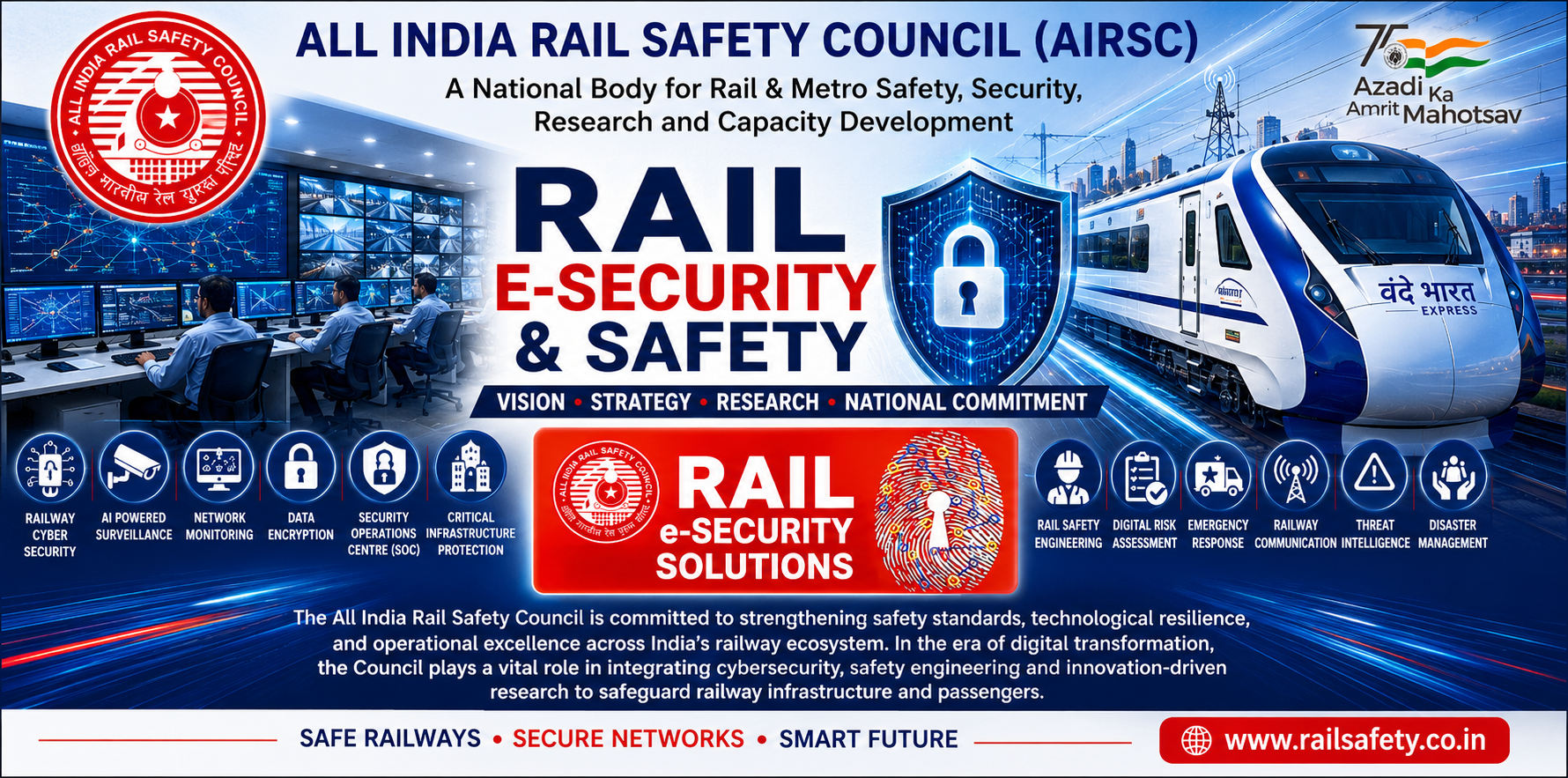
The All India Rail Safety Council is a premier body committed to strengthening safety standards, technological resilience, and operational excellence across India’s railway ecosystem. In the era of digital transformation, the Council plays a vital role in integrating cybersecurity, safety engineering, and innovation-driven research to safeguard railway infrastructure and passengers. Vision To establish Indian Railways as a globally benchmarked, digitally secure, and safety-driven transportation system, ensuring zero-compromise on passenger safety, operational reliability, and national infrastructure protection. Mission To promote comprehensive Rail E-Security frameworks across all railway operations To integrate cybersecurity with railway safety systems for holistic risk mitigation To encourage research, innovation, and indigenous technology development To build capacity, awareness, and skilled human resources in rail safety and cybersecurity To develop standardized policies and compliance frameworks aligned with global best practices Necessity of Rail E-Security & Safety With the rapid adoption of digital technologies such as automated signaling, AI-based operations, IoT-enabled monitoring, and cloud-based railway services, the railway ecosystem has become increasingly complex and interconnected. This transformation has made Rail E-Security a critical necessity due to: Rising cyber threats targeting critical infrastructure Increased dependency on digital control and communication systems Need to protect passenger data and operational intelligence Ensuring uninterrupted railway services and national security Rail safety today is not only about physical infrastructure but also about securing digital and cyber-physical systems that directly influence train operations and passenger safety. Council’s Involvement in Rail E-Security & Safety The All India Rail Safety Council actively contributes to strengthening rail e-security through: Policy Advocacy & Framework Development Formulating national-level rail cybersecurity guidelines Promoting adoption of standards such as ISO 27001 and IEC 62443 Technical Collaboration Partnering with government agencies, research institutions, and industry experts Supporting implementation of advanced systems like Automatic Train Protection (Kavach) Capacity Building Conducting training programs, workshops, and awareness campaigns Developing specialized certification programs in rail cybersecurity Audit & Compliance Facilitating security audits and vulnerability assessments Encouraging continuous monitoring and compliance mechanisms Innovation Promotion Supporting startups and indigenous solutions under “Make in India” Encouraging development of secure digital railway technologies Rail Safety Research & Development Forum (RSRDF) To further strengthen innovation and knowledge sharing, the Council promotes the Rail Safety Research & Development Forum (RSRDF) as a dedicated platform for advancing rail safety and e-security. Key Objectives of RSRDF To drive cutting-edge research in rail cybersecurity and safety systems To facilitate collaboration between academia, industry, and government bodies To develop future-ready technologies for smart and autonomous railways To create knowledge repositories, standards, and best practices Priority Research Areas Cybersecurity for signaling and train control systems AI-based predictive safety and threat detection Secure communication networks (5G/FRMCS for railways) IoT and sensor security in railway infrastructure Blockchain applications for secure data management Human factors and safety engineering Simulation and cyber-range environments for training Strategic Importance The RSRDF serves as a national innovation hub, ensuring that India remains at the forefront of safe, secure, and technologically advanced railway systems. Rail E-Security & Safety: Advanced Framework, Research, and Future Readiness 1. Integrated Concept of Rail E-Security & Safety Rail e-security encompasses the protection of cyber-physical railway systems, including: Signaling and train control systems Communication networks (GSM-R, LTE, 5G) Passenger and freight management systems IoT-enabled smart infrastructure A unified approach ensures safety, reliability, and resilience across railway operations. 2. Critical Risk Landscape Railway systems face evolving threats such as: Ransomware attacks on operational systems Signal interference and communication spoofing Unauthorized system access Data breaches and service disruptions These threats have direct implications on passenger safety and operational continuity, making cybersecurity a core safety concern. 3. Advanced Rail E-Security Architecture Multi-Layer Security Approach Network security (firewalls, IDS/IPS) Application security (ticketing, databases) OT security (SCADA, signaling systems) Endpoint and device protection Identity & Access Management Multi-factor authentication (MFA) Role-based access control (RBAC) Digital signatures and PKI Real-Time Monitoring Security Operations Centers (SOC) AI-driven threat detection Incident response frameworks 4. Integration with Railway Safety Systems Automatic Train Protection systems (e.g., Kavach) Secure signaling and cab communication systems AI-enabled surveillance and monitoring These systems ensure real-time safety enforcement and cyber resilience. 5. Research & Development in Rail E-Security Key Focus Areas AI and machine learning for predictive security Cyber-physical system protection Secure next-generation communication systems Autonomous train safety validation Cyber simulation and testing environments Innovation Ecosystem Collaboration with universities and R&D institutions Establishment of dedicated research centers Public-private partnerships 6. Challenges Integration of legacy systems Lack of uniform cybersecurity standards Skill gaps and awareness issues Expanding digital attack surface 7. Strategic Roadmap National Rail Cybersecurity Policy Indigenous technology development Continuous training and skill development Real-time monitoring and threat intelligence Strengthening R&D through RSRDF 8. Future Vision A secure, smart, and resilient railway ecosystem powered by: Digital innovation Advanced cybersecurity frameworks Intelligent safety systems Continuous research and development Rail E-Security & Safety is a national priority and strategic necessity. Through strong leadership, research-driven innovation, and collaborative efforts, the All India Rail Safety Council is committed to building a railway system that is secure, efficient, and globally recognized for excellence in safety and technology
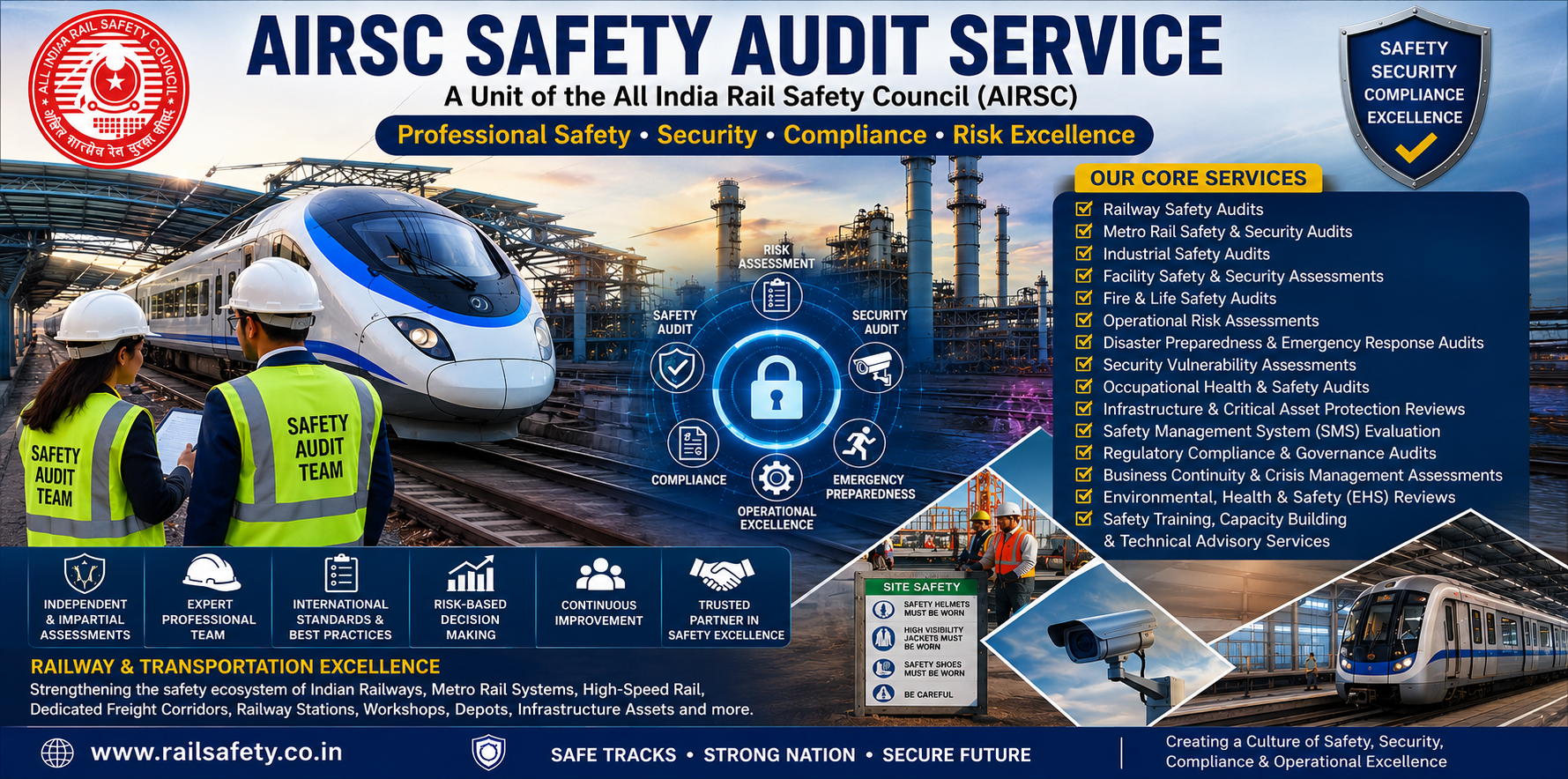
AIRSC SAFETY AUDIT SERVICE A Unit of the All India Rail Safety Council (AIRSC) Professional Safety • Security • Compliance • Risk Excellence AIRSC Safety Audit Service (ASAS), a specialized unit of the All India Rail Safety Council (AIRSC), is a premier professional organization dedicated to delivering comprehensive Safety, Security, Risk Assessment, Compliance, and Operational Audit Services across the railway, metro rail, transportation, industrial, infrastructure, energy, manufacturing, healthcare, logistics, commercial, and public sectors. Established with the vision of promoting a proactive safety culture and world-class operational excellence, AIRSC Safety Audit Service provides independent, systematic, and technically competent assessments that enable organizations to identify hazards, mitigate operational risks, strengthen security systems, ensure regulatory compliance, and continuously improve organizational resilience. Backed by experienced safety professionals, railway experts, engineers, disaster management specialists, security consultants, and risk management professionals, AIRSC adopts internationally recognized methodologies and industry best practices to evaluate safety performance, operational preparedness, emergency response capability, physical security, cyber resilience, and business continuity. Our Core Services • Railway Safety Audits • Metro Rail Safety & Security Audits • Industrial Safety Audits • Facility Safety & Security Assessments • Fire & Life Safety Audits • Operational Risk Assessments • Disaster Preparedness & Emergency Response Audits • Security Vulnerability Assessments • Occupational Health & Safety Audits • Infrastructure & Critical Asset Protection Reviews • Safety Management System (SMS) Evaluation • Regulatory Compliance & Governance Audits • Business Continuity & Crisis Management Assessments • Environmental, Health & Safety (EHS) Reviews • Safety Training, Capacity Building & Technical Advisory Services Railway & Transportation Excellence As a specialized initiative of the All India Rail Safety Council, AIRSC Safety Audit Service places particular emphasis on strengthening the safety ecosystem of Indian Railways, Metro Rail Systems, High-Speed Rail Corridors, Dedicated Freight Corridors, Railway Stations, Workshops, Depots, Rolling Stock Maintenance Facilities, Railway Construction Projects, Logistics Parks, Freight Terminals, and Rail Infrastructure Assets. Our multidisciplinary audit framework evaluates operational safety, signalling and communication interfaces, station safety, passenger protection measures, level crossing safety, emergency preparedness, disaster response capability, occupational safety, infrastructure integrity, security management, and operational resilience to support safer and more efficient railway operations. AIRSC Safety Audit Service is committed to helping organizations build a culture where Safety, Security, Quality, Compliance, and Risk Management become integral components of sustainable growth. Through professional audits, technical expertise, practical recommendations, and continuous improvement initiatives, we assist organizations in protecting people, infrastructure, assets, operations, and reputation while supporting India's vision of Viksit Bharat 2047, Atmanirbhar Bharat, Digital India, and Safe, Smart & Sustainable Transportation Systems. AIRSC Safety Audit Service stands as a trusted partner in delivering professional safety assurance, integrated security solutions, operational excellence, and risk-based decision-making—creating safer workplaces, resilient infrastructure, and a secure future for India's transportation and industrial sectors.
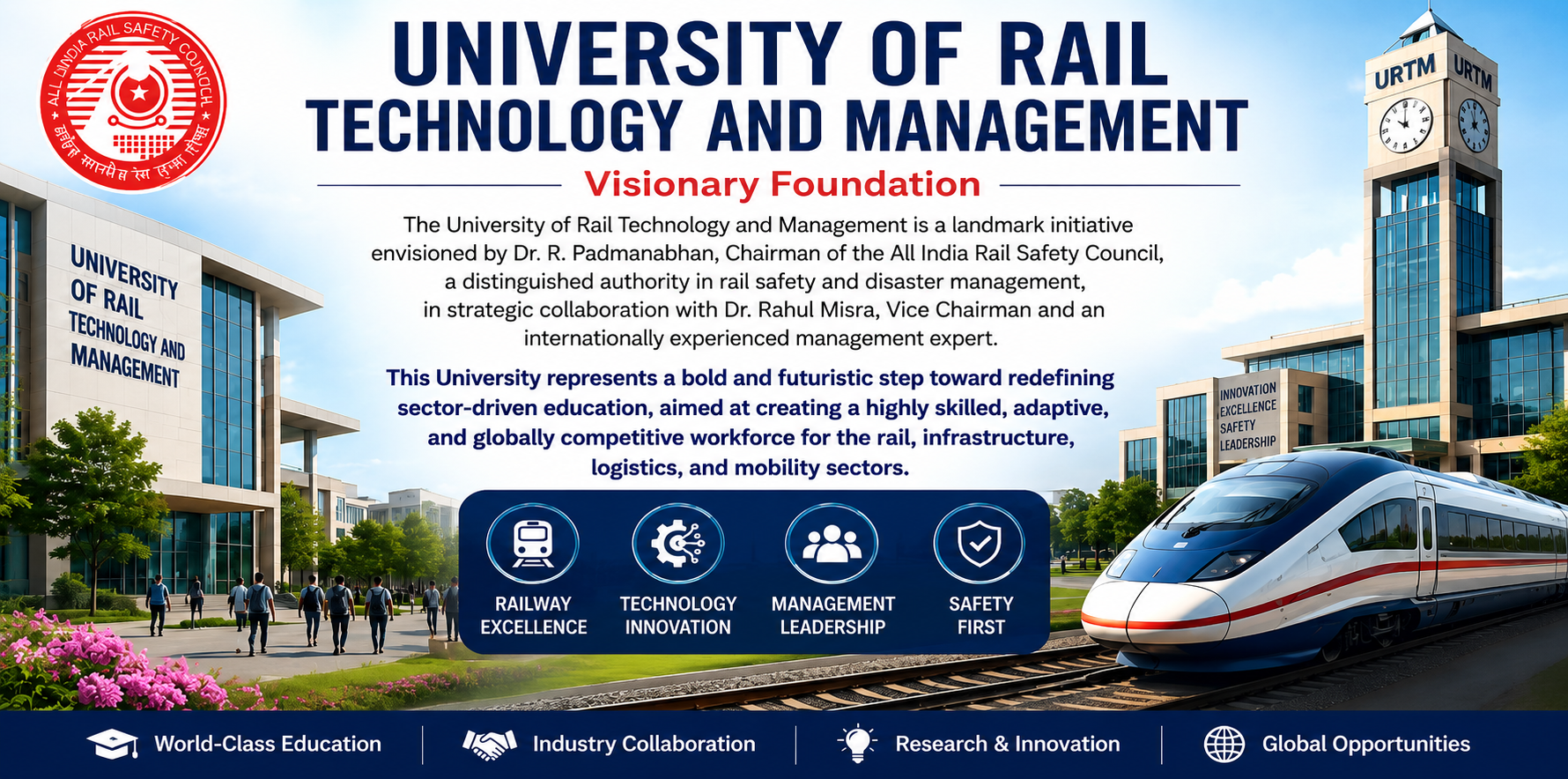
UNIVERSITY OF RAIL TECHNOLOGY AND MANAGEMENT Visionary Foundation The University of Rail Technology and Management is a landmark initiative envisioned by Dr. R. Padmanabhan, Chairman of the All India Rail Safety Council, a distinguished authority in rail safety and disaster management, in strategic collaboration with Dr. Rahul Misra, Vice Chairman and an internationally experienced management expert. This University represents a bold and futuristic step toward redefining sector-driven education, aimed at creating a highly skilled, adaptive, and globally competitive workforce for the rail, infrastructure, logistics, and mobility sectors. Context & Global Relevance The 21st century has ushered in an era of unprecedented transformation driven by digitalization, artificial intelligence, global connectivity, sustainability imperatives, and smart infrastructure development. Traditional education systems are increasingly challenged by the speed, scale, and complexity of these changes. Aligned with the transformative goals of National Education Policy 2020, the University is designed to bridge the widening gap between academic knowledge and industry expectations, especially in mission-critical sectors such as railways, transport systems, and disaster resilience. In today’s 24/7 global economy, professionals must be: Technologically proficient Operationally agile Safety-conscious Globally aware The University responds to this need by creating a future-ready learning ecosystem. Core Academic Domains & Schools of Excellence The University will establish multi-disciplinary Schools and Centres of Excellence, integrating technology, management, and safety sciences: 1. School of Rail Engineering & Infrastructure Railway track engineering & high-speed rail systems Signalling, telecommunications & train control systems Rolling stock design, maintenance & modernization Smart rail infrastructure & metro rail systems 2. School of Rail Safety & Disaster Management Rail safety engineering and risk assessment Accident investigation & forensic analysis Disaster preparedness, response & resilience Fire safety, emergency evacuation & crisis leadership 3. School of Transport & Logistics Management Multimodal logistics & supply chain management Freight corridors & port connectivity Urban mobility & smart transportation systems Aviation, maritime & integrated transport studies 4. School of Technology, AI & Digital Rail Systems Artificial Intelligence in rail operations Internet of Things (IoT) & predictive maintenance Data analytics, cybersecurity & digital twins Automation, robotics & smart control systems 5. School of Business, Leadership & Policy Infrastructure finance & project management Public policy & regulatory frameworks Strategic management for transport sectors Leadership development & global business strategy 6. School of Sustainability & Environmental Studies Green rail technologies & energy efficiency Climate resilience in transport infrastructure Environmental impact assessment Sustainable urban mobility 7. School of Skill Development & Vocational Training Technician and operator skill certification Field-based and simulation-driven training Industry apprenticeship programs Employability enhancement modules The University aims to transform professional education into an employability-driven ecosystem by: Creating industry-aligned, outcome-based programs Establishing global academic and corporate partnerships Promoting research, innovation, and incubation in rail technologies Building a benchmark institution for sector-specific education The ultimate goal is to produce job creators, innovators, and safety leaders, not merely degree holders. Innovative Learning Model – Triangle Approach To meet diverse learning needs and global accessibility, the University will adopt a Triangular Learning Framework: Online Learning Global classrooms, digital platforms, AI-enabled learning systems Blended Learning Integration of classroom teaching with digital simulations and case studies Manual / Experiential Learning Hands-on training, live projects, field exposure, and industry immersion Industry Integration & Custom Programs The University will function as a dynamic knowledge and innovation hub, offering: Tailor-made programs endorsed by industry and corporate partners Customized executive education and leadership programs Real-time curriculum updates based on industry demand A dedicated digital portal for flexible, modular, and lifelong learning Programs will be: Autonomous Skill-oriented Globally benchmarked Industry-recognized Research, Innovation & Knowledge Platform The University will establish advanced research centres focusing on: Rail safety innovation and accident prevention technologies Smart mobility and intelligent transport systems Disaster risk reduction and resilience engineering Emerging technologies in infrastructure and logistics This knowledge platform will be built on three pillars: Creativity – Competence – Challenge Institutional Vision The University of Rail Technology and Management is envisioned not merely as an academic institution, but as a national and global centre of excellence that will: Redefine professional education in the rail and transport sector Contribute to nation-building and infrastructure growth Support Make in India and Atmanirbhar Bharat initiatives Position India as a global leader in rail safety, technology, and management education In a rapidly evolving world where technology, safety, and management converge, the University stands as a transformational initiative—designed to shape the future of mobility, infrastructure, and human capability. It is a vision of excellence, innovation, and national progress, committed to creating professionals who are not only employable but also capable of leading change in a complex, interconnected world.
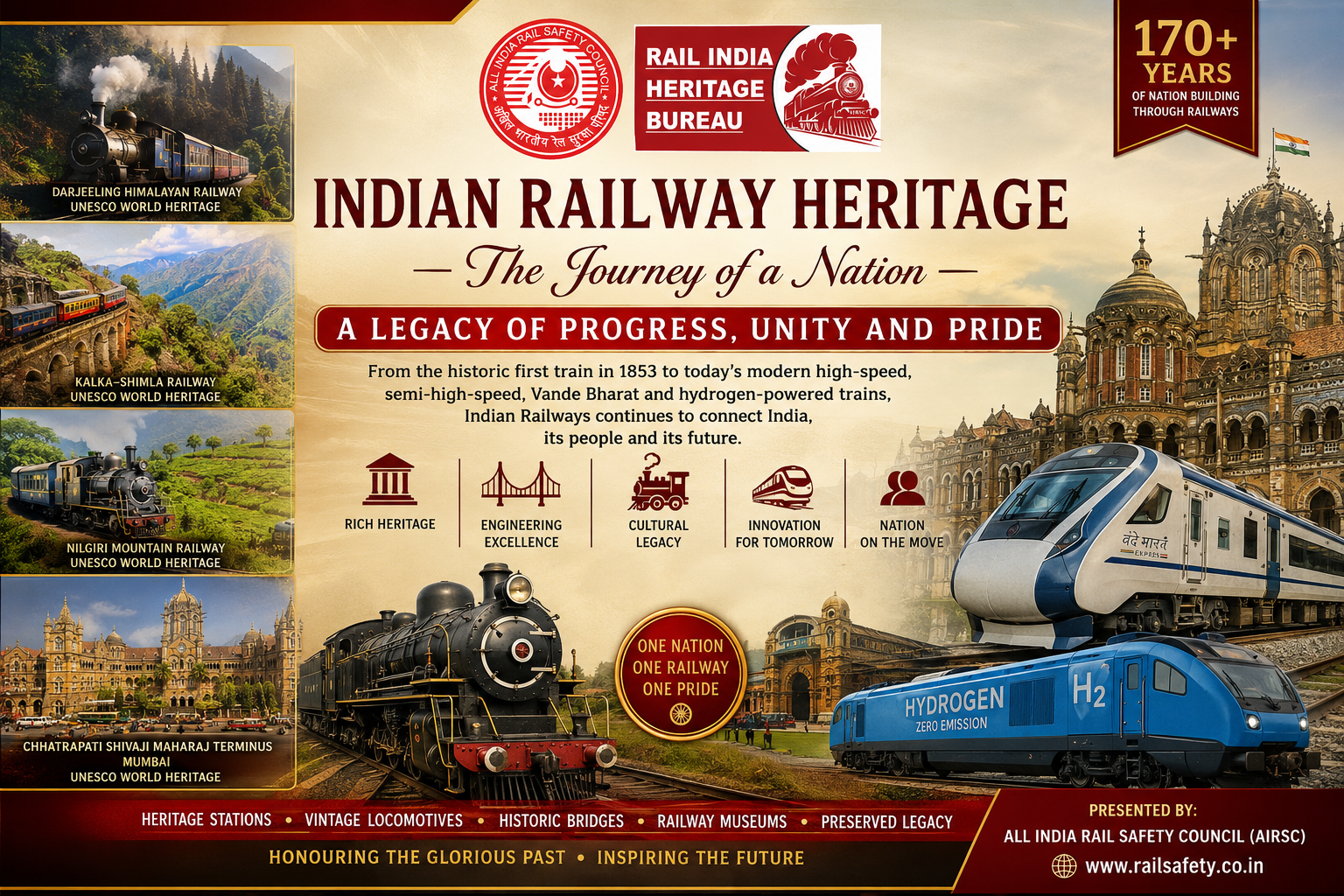
Indian Railway Heritage – The Journey of a Nation A Legacy of Progress, Unity and Pride For over 170 years, Indian Railways has been far more than a transportation system—it has been the lifeline of the nation, connecting people, cultures, industries, and dreams across every region of India. From the historic first passenger train that ran between Mumbai (Bori Bunder) and Thane in 1853 to today's modern high-speed, semi-high-speed, Vande Bharat, and hydrogen-powered trains, Indian Railways represents one of the greatest engineering and social achievements in the world. India's railway heritage reflects remarkable engineering excellence, architectural brilliance, and cultural significance. The nation proudly preserves iconic UNESCO-recognised railway heritage, including the Darjeeling Himalayan Railway, Nilgiri Mountain Railway, Kalka–Shimla Railway, and the historic Chhatrapati Shivaji Maharaj Terminus, Mumbai. These timeless landmarks continue to inspire generations while showcasing India's rich railway legacy. Across the country, heritage railway stations, vintage steam locomotives, historic bridges, workshops, museums, and preserved rolling stock narrate the extraordinary story of India's railway evolution. The National Rail Museum and regional railway museums safeguard this invaluable legacy, ensuring that future generations appreciate the remarkable journey of Indian Railways. Today, Indian Railways is entering a new era of innovation with modern station redevelopment, indigenous technologies, automatic train protection systems, green mobility, and hydrogen-powered trains, while preserving its historic identity. This unique balance between heritage and innovation demonstrates India's commitment to building a railway system that honours its glorious past while embracing the future. Indian Railway Heritage is not merely a record of the past—it is a living symbol of national unity, technological progress, public service, and the enduring spirit of India. Every station, every track, and every train carries the story of a nation on the move. ALL INDIA RAIL SAFETY COUNCIL (AIRSC)
AIRSC INITIATIVE FOR RAILWAY HEALTHCARE & JANAUSHADHI SERVICES Enhancing Passenger Safety, Public Health & Affordable Medical Access The All India Rail Safety Council (AIRSC), as a leading national institution dedicated to advancing railway safety and public welfare, has undertaken a strategic initiative to strengthen healthcare access, emergency medical response, and preventive health systems across India’s railway network. Recognizing the scale and critical importance of Indian Railways—where over 23 million passengers travel daily—AIRSC has conducted an in-depth assessment on establishing Pradhan Mantri Bhartiya Janaushadhi Kendras (PMBJK) at major railway stations across the country. This initiative is designed to integrate rail safety with public health infrastructure, ensuring that passengers, railway personnel, and the general public have access to affordable medicines, timely medical care, and emergency response services. Strategic Need and National Importance Indian Railways is one of the largest transport networks in the world, serving as the lifeline of the nation. With such a vast passenger base, there is a critical need for: Immediate medical assistance for traveling passengers Emergency response during accidents and untoward incidents Preventive and occupational health systems for railway employees Affordable and accessible medicines for the public The proposed integration of Janaushadhi Kendras within railway premises addresses these needs by combining healthcare accessibility, affordability, and safety preparedness. Core Healthcare & Safety Functions 1. Medical Support for Railway Passengers Immediate medical assistance for passengers falling sick during travel On-site primary healthcare services at major railway stations Emergency stabilization before referral to hospitals . Emergency Response to Railway Incidents Medical support during railway accidents and untoward incidents Handling approximately 360 incidents annually Rapid response systems to minimize casualties and improve survival outcomes 3. Emergency Treatment Services кругл-the-clock emergency care for passengers and railway users First aid, trauma care, and stabilization services Integration with disaster management systems 4. Occupational Health Services for Railway Workforce Pre-Employment Medical Examination (PEME) Ensuring only medically fit candidates are recruited Approximately 50,000 candidates examined annually Periodic Medical Examination (PME) Continuous health monitoring of serving railway employees Ensuring fitness for safety-critical roles Approximately 1,20,000 employees examined annually Medical Boards & Certification Medical evaluation and certification for serving employees Fitness assessment for duty continuation and specialized roles 5. Health Productivity & Workforce Efficiency Reduction in loss of man-days due to illness Effective monitoring by medical officers Current sickness-related loss maintained at approximately 2%, reflecting strong health management systems Integration with Pradhan Mantri Bhartiya Janaushadhi Kendras (PMBJK) AIRSC envisions the establishment of Janaushadhi Kendras at key railway stations to provide: Affordable generic medicines across all therapeutic categories Access to essential healthcare products and surgical items Availability of a wide product basket including 800+ drugs and 150+ surgical items Future inclusion of advanced medical products such as stents and implants This initiative supports the Government of India’s vision of affordable healthcare for all, while leveraging railway infrastructure for maximum reach and impact. Benefits to Railway Passengers and General Public For Railway Passengers Immediate access to low-cost medicines during travel Availability of first aid and emergency medical care at stations Increased confidence and safety assurance while traveling Support for elderly passengers, children, and medically vulnerable individuals For the General Public Affordable medicines for nearby communities Accessible healthcare services in semi-urban and rural areas Reduced healthcare expenditure through generic drugs Strengthened public health infrastructure For Railway Employees Improved occupational health monitoring Reduced health-related absenteeism Enhanced safety in train operations through medically fit workforce Beneficiaries Senior Citizens – Affordable and accessible medicines Economically Weaker Sections – Reduced healthcare costs Women (especially low-income households) – Accessible primary healthcare Persons with Disabilities – Improved access to medicines and support Railway Passengers – Safe and secure travel with medical backup Local Communities near Railway Stations – Community healthcare access Strategic Impact This initiative will contribute to: Strengthening railway passenger safety and confidence Enhancing emergency preparedness and response systems Promoting affordable healthcare access across India Supporting national health and safety missions Integrating transport infrastructure with public health services Alignment with National Vision The initiative aligns with: Atmanirbhar Bharat – Promoting indigenous and affordable healthcare solutions Viksit Bharat 2047 – Building a safe, healthy, and developed nation Universal Healthcare Goals – Ensuring access to essential medicines for all The All India Rail Safety Council remains committed to integrating safety, health, and public welfare into the railway ecosystem. By establishing Janaushadhi Kendras and strengthening medical systems across railway networks, AIRSC aims to create a holistic safety framework where: “Every Passenger is Safe, Every Journey is Secure, and Healthcare is Accessible to All.” This initiative represents a transformative step towards combining railway safety with public healthcare delivery. By leveraging the vast reach of Indian Railways, AIRSC is enabling a future where affordable medicines, emergency care, and preventive health services are seamlessly available to millions of passengers and citizens.